White kitchens are so over. Have you heard this recently? Or seen that headline on some interior design article?
The argument is that colorful cabinets are taking over again, and that kitchen design trends are swinging toward dark wood, green, blue, or dramatic two-tone kitchens. That’s partially true!
But that might have you wondering if choosing white kitchen cabinets is still a viable choice, or if it’s going to look outdated in five years.
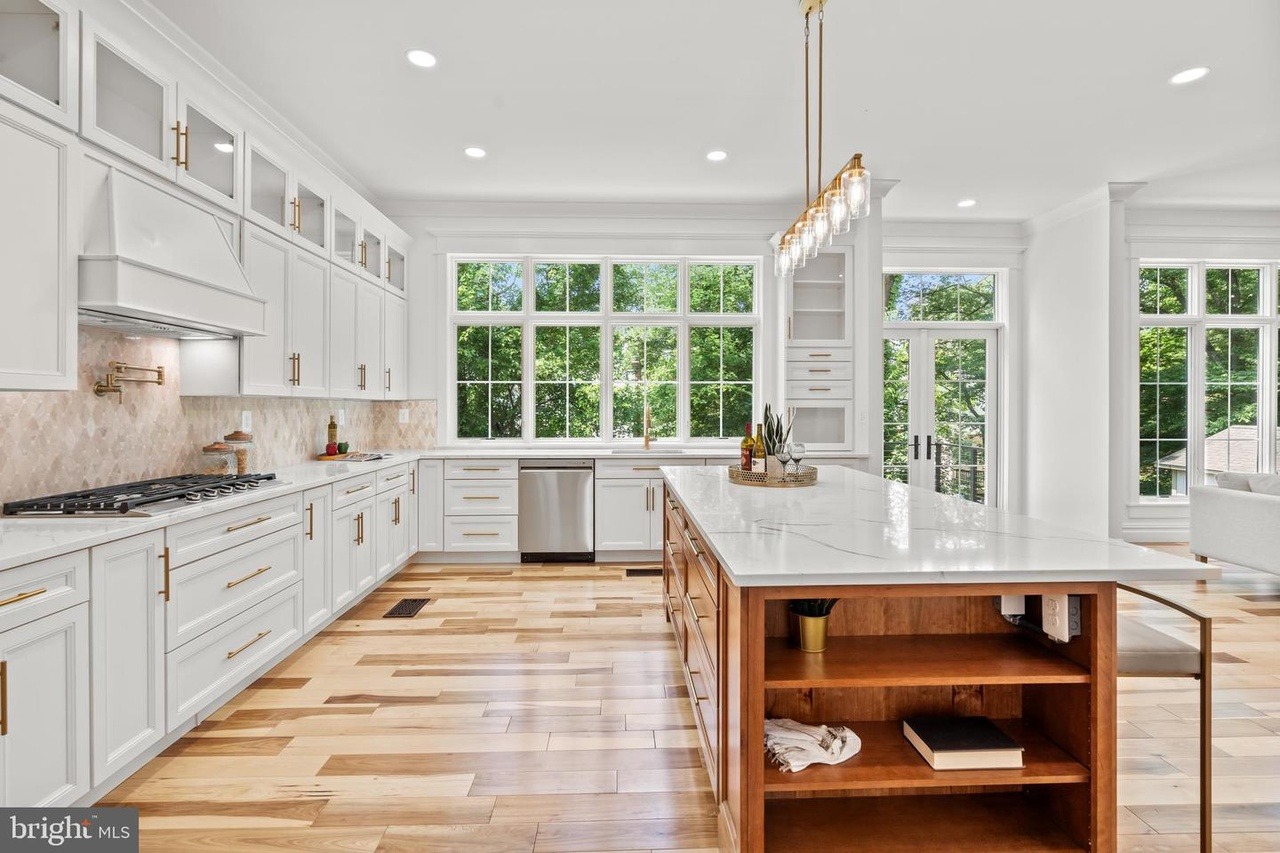
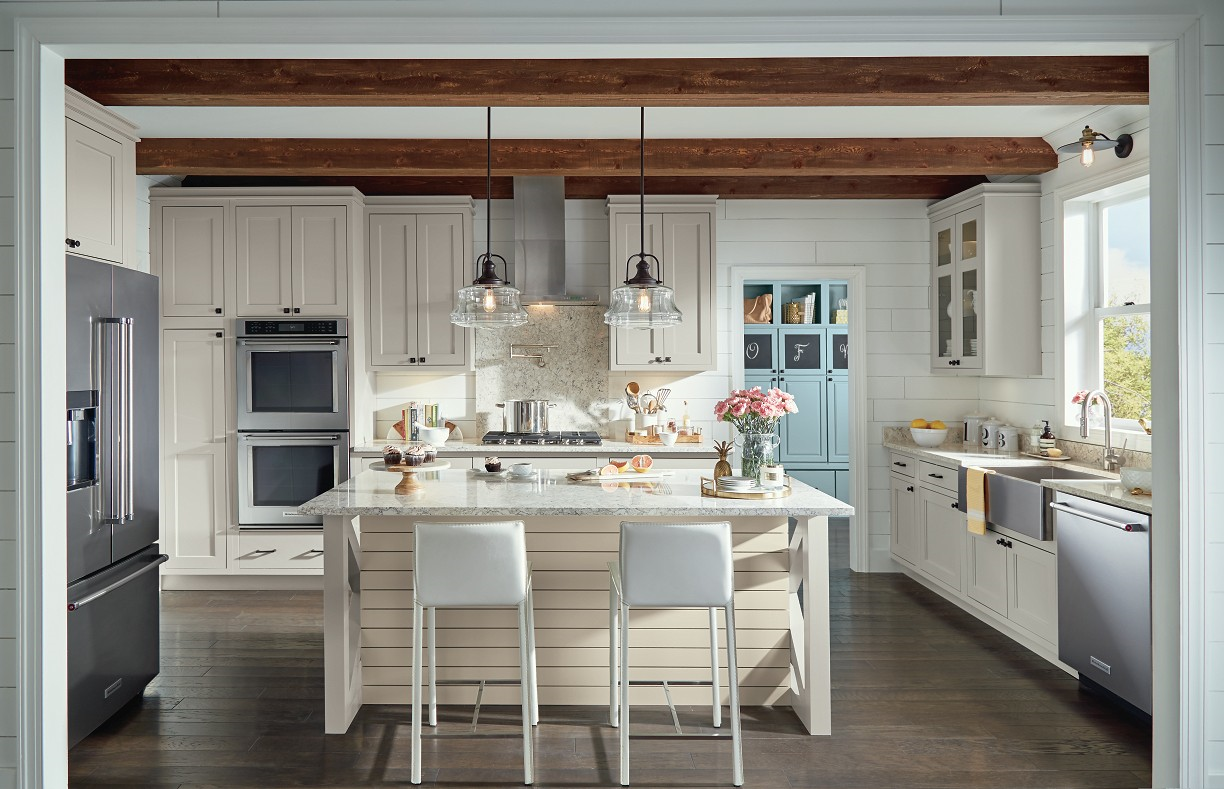
We can say with confidence, white kitchen cabinets are not out of style. White has remained a popular kitchen cabinet color for decades. Why? Because it’s highly versatile, easy to style, and less tied to a particular design era than bolder finishes. The key is choosing the right cabinet style, finish, hardware, and surrounding materials so the kitchen has its own personality, without getting tied up in a specific trend.
That last part is important—white cabinets themselves don’t make a kitchen look dated. It’s usually the way things are styled around them.
Why the White Look Won’t Fade
White cabinets have been around long enough that calling them a “trend” doesn’t exactly work.
Kitchen styles have changed dramatically over the years. Cabinet profiles have gone from ornate to minimalist, appliances are smaller, and open shelving was a craze for a while. Then came the return of natural wood cabinets.
But throughout the years, white cabinetry has always found its way back into kitchens.
And there are many reasons for that staying power:
- White reflects light
- It works with a huge range of countertops and flooring
- It can make a smaller kitchen feel more open
On top of that, it doesn’t require every other design choice to revolve around it.
So if you’re trying to create a kitchen you’ll still enjoy years from now, white becomes an especially great option.
Think about the difference between choosing a cabinet color because it happens to be everywhere right now, and choosing one because you can already picture it working with three different countertops, two flooring options, and the house you might live in ten years from now. White just gives you that extensive flexibility.
It also explains why white cabinetry can work well in traditional, transitional, farmhouse, coastal, and modern kitchens.
White is Timeless, Not Trendy
There’s another reason white cabinets just keep enduring: they give homeowners more flexibility when it comes time to sell.
That doesn’t mean a kitchen with white cabinets adds a certain dollar amount to your home’s value (no cabinet color can make that promise!).
But white does create a neutral foundation that appeals to a wide range of people.
It’s like walking into two comparable homes. One kitchen has a niche cabinet color and a dramatic backsplash, while the other has clean white cabinets, a simple granite countertop, and soft gold finishes.
The second kitchen probably isn’t going to create a strong emotional reaction, but that’s actually a good thing. A buyer can more easily picture changing the hardware, painting the walls, replacing a light fixture, or adding their own personality.
And if you’re remodeling your kitchen with a future resale in mind, that flexibility is something to consider.
Remodeling research also shows that the most expensive renovation doesn’t automatically produce the best return. A recent Cost vs. Value analysis found that a minor kitchen remodel can deliver a strong return relative to larger, more expensive remodel projects.
Choosing white for your cabinets doesn’t guarantee a higher resale value, but it can certainly give you a great foundation for impressing future homebuyers.
🛠️ Pro Insight: If resale is part of your decision, think beyond the cabinet color. A well-designed kitchen with quality cabinetry, useful storage, and durable materials is more likely to appeal to buyers than a room with too much design-trendiness.
White Cabinets Can Work With Any Style
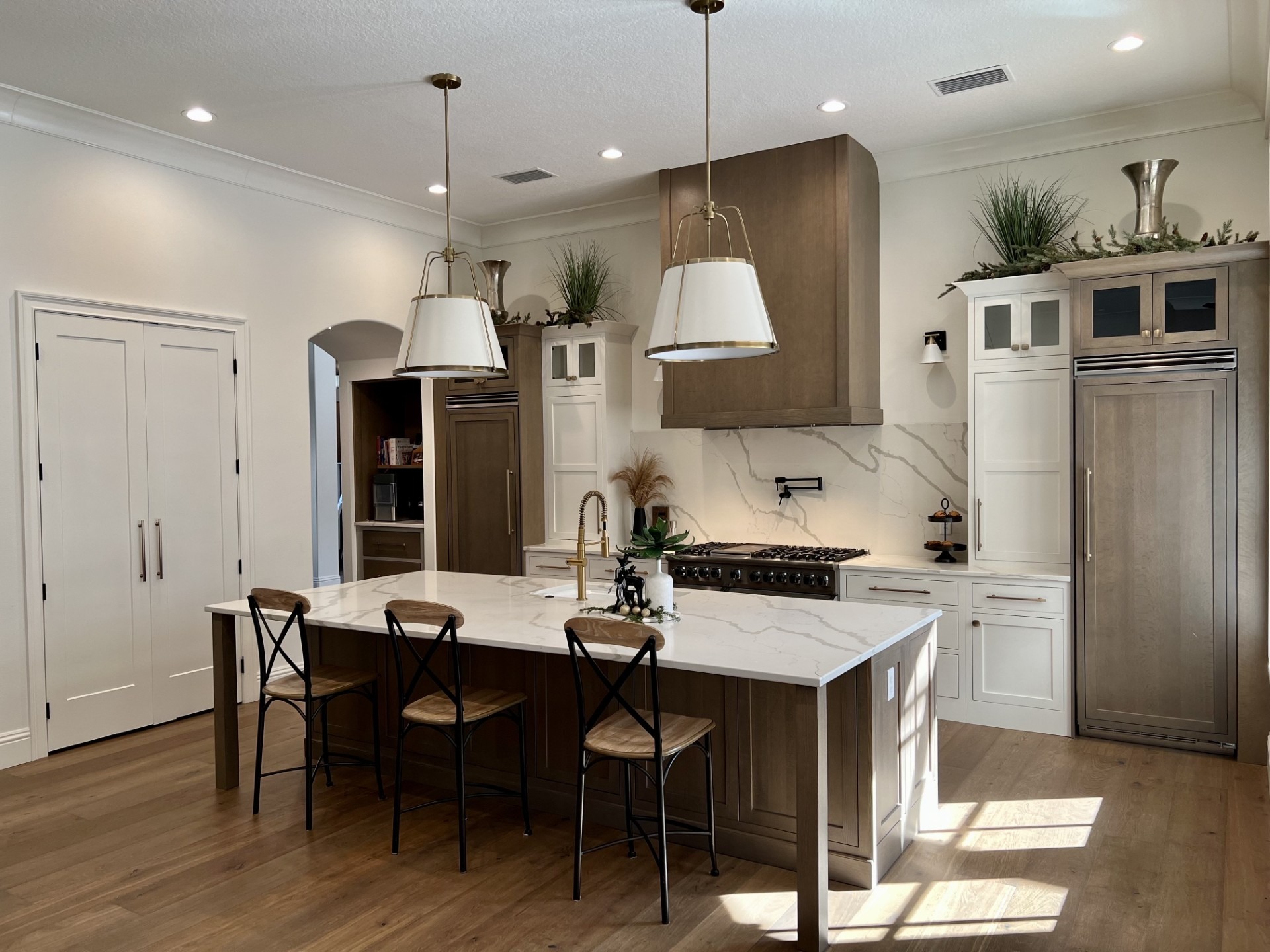
White cabinetry is truly the chameleon of kitchen design.
The same white cabinet can look completely different depending on its door style, hardware, countertop, flooring, lighting, and backsplash.
For instance, a simple Shaker door feels relaxed and classic. And a flat-panel door makes the room look more contemporary and minimalist.
If you’re deciding between those two, our guide to Shaker vs. Slab cabinets can help you compare how each door style changes the look.
Then there are the smaller details:
- Brass hardware makes white cabinetry look warmer and more traditional
- Matte black hardware creates contrast and can sharpen up a modern kitchen
- Wood accents add texture for a biophilic space
- Marble-look quartz can make the room feel polished
- Butcher block is inviting and informal for farmhouse kitchens
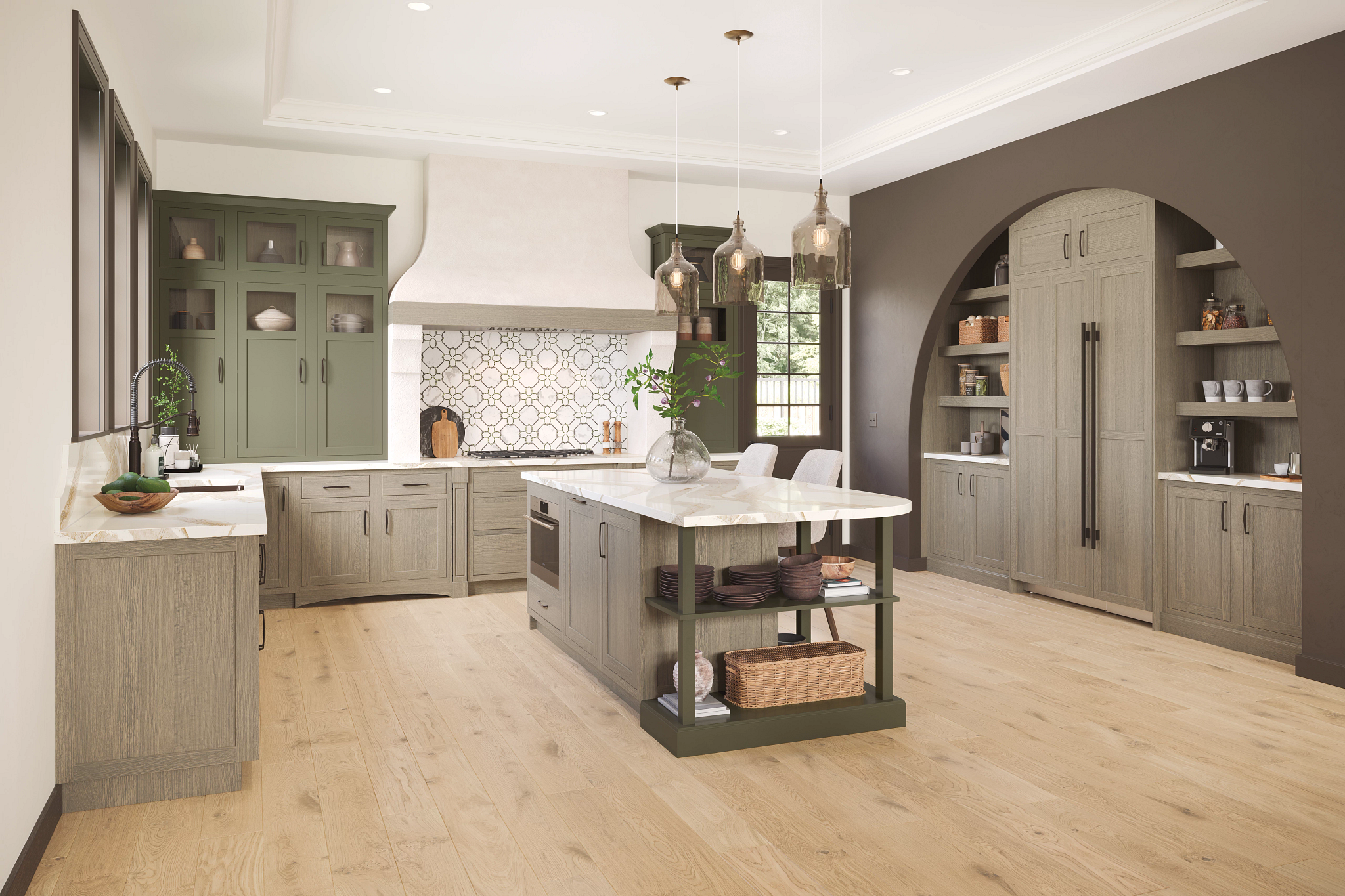
White is also an ideal partner for a two-tone kitchen. The pairing options are almost limitless. For example, white upper cabinets with a darker island, or white perimeter cabinetry with a natural wood finish. This two-tone approach injects some personality to prevent that “overly sterile white” look.
Considering the two-tone kitchen route? Take a look at these two-tone cabinet ideas for ways to mix finishes.
The bottom line is, white doesn’t pigeonhole you into one aesthetic.
White Cabinets Come in Various Finishes
If you’re interested in buying white cabinets, this is an important decision to make: what kind of white cabinet are you buying?
Two cabinets can look similar in a photograph but be made with very different materials and finishes.
Painted Cabinets
These have a painted coating applied over the cabinet surface. This gives you the familiar smooth, solid-color appearance associated with many white kitchens.
Thermofoil Cabinets
These use a vinyl-like material that is heat-bonded over the cabinet surface. They’re often chosen for their smooth appearance, easy cleaning, and affordability.
Your budget, lifestyle, cabinet construction, desired look, and expectations for long-term use all play into which finish you choose. If you’re comparing the two, our guide to thermofoil vs. painted cabinets can help you decide.
It’s also important to remember that “white” isn’t just one universal color. There are crisp and cool whites, and creamy and warm whites. Put a cool white cabinet next to a warm countertop and suddenly the cabinets look almost blue. Put a warm white next to a cool gray and the cabinet can look creamier.
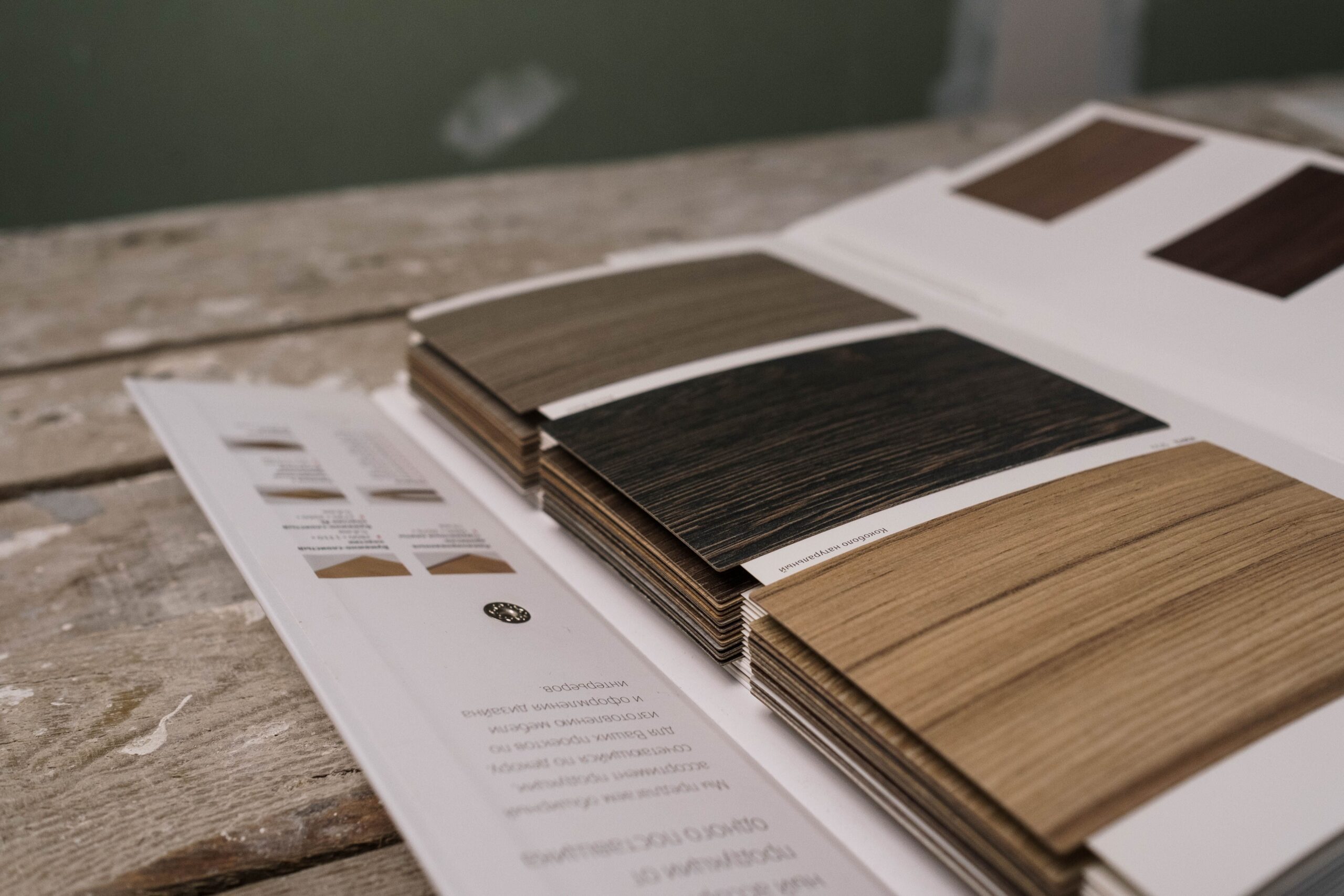
Always look at an actual sample next to your countertop, flooring, backsplash, and wall color to match tones the way you want them.
How to Keep White Cabinets From Looking Dated
We’ve hyped up white cabinets a lot. But this is also true: white kitchens can look dated.
So can kitchens with green cabinets, blue cabinets, or natural wood cabinets. Pretty much anything can age badly when the surrounding choices belong too strongly to one specific design era.
If you want white cabinets to feel current for years to come, look at the entire composition in the room.
1. Be careful with “matchy-matchy” finishes.
A kitchen doesn’t need every surface to be the exact same shade of white.
Too much matching can completely flatten the room. Introduce variation through natural wood, stone, metal, flooring, or paint.
2. Don’t pile on every trend at once.
White cabinets + heavily patterned backsplash + trendy pendant lights + statement hardware + another competing countertop trend just turns into one big time capsule.
Pick a few trending elements you genuinely love, and let the rest blend in more seamlessly.
3. Consider contrast.
White cabinetry looks better when something in the room draws the eye to it.
That might be a wood island, darker flooring, a stone countertop with visible movement, or simple black or brass hardware. This contrasting piece is a good place to inject your own personal flair.
If you like the idea of pairing white with gray, gray and white kitchen cabinet ideas can give you inspiration without turning the room into a sea of boring neutrals.
4. Choose hardware with some staying power.
Hardware is relatively easy to replace, which makes it a great place to experiment. But you don’t have to choose the most distinctive, architectural option available.
Simple knobs and pulls in brass, bronze, black, or nickel can work with white cabinets across a range of styles.
That’s one of the cool advantages of white cabinetry: you can change the jewelry without replacing the dress.
White Kitchen Cabinets: Pros and Cons
If you’re still on the fence about white kitchen cabinetry, here’s a quick-fire list of the advantages and disadvantages.
| Pros | Cons |
| Works with a wide range of design styles | Dirt, spills, and smudges can be more noticeable |
| Creates a bright, open feeling | Poorly chosen whites can look cold or stark |
| Easy to pair with different countertops and backsplashes | Very common, so they may feel less distinctive |
| Offers flexibility if you change your decor later | Some finishes require more care than others |
| Broad, neutral appeal for resale | An all-white kitchen can feel flat without texture or contrast |
| Makes a smaller kitchen feel more spacious | White doesn’t hide wear as well as some darker finishes |
The biggest advantage overall? Design flexibility.
The biggest drawback? White requires you to pay extra attention to the rest of the design in the room.
That’s not necessarily a bad thing. It just means you can’t lean heavily on the color of the cabinets to create the entire kitchen’s personality.
And when it comes to everyday life, think about how much cooking, entertaining, kids, pets, and general kitchen chaos happens in your home. A pristine white kitchen on Pinterest is one thing, but a white kitchen where kids are eating spaghetti is another.
So, Are White Kitchen Cabinets Out of Style?
No. And they aren’t going anywhere anytime soon.
That doesn’t mean white is always the most fashionable cabinet color. Trends will keep rising and falling. People are loving walnut, sage green, and natural oak right now, but who knows what will come next.
But white cabinets have stayed relevant because they can be dressed up, warmed up, modernized, simplified, or completely transformed by the design features around them.
If you love white, you don’t need to abandon it because the design world has developed a sudden enthusiasm for something else, or because a random blog said it’s out this year.
Block out the noise and build the kitchen that feels great for your life.
When you’re ready to start comparing cabinet styles, finishes, and configurations, shop iCabinetry’s kitchen cabinets to explore your options.
Still figuring out exactly what will work for your space?
👉 Request a free cabinet quote to get some answers.
FAQs: Are White Kitchen Cabinets Out of Style?
White cabinets may become more or less popular over time, but their long history in kitchen design makes them unlikely to become universally “outdated.” Their versatility allows them to work across traditional, transitional, farmhouse, and modern kitchens.
The biggest advantages are versatility, brightness, and broad design appeal. White cabinets are easy to pair with different countertops, hardware, flooring, and backsplashes. The main drawbacks are that dirt and wear can be more visible, and an all-white kitchen can feel flat or overly stark without enough texture and contrast.
There isn’t one best white for every kitchen. Cool whites tend to work well with cool countertops and finishes, while warmer whites can pair better with wood tones, warm metals, and creamy stone. Always compare cabinet samples with the other materials in your kitchen before making a final decision.
White cabinets can show fingerprints, splashes, dust, and food more readily than darker finishes. However, how easy they are to maintain depends heavily on the cabinet material and finish. Smooth, durable surfaces are generally easier to wipe clean than highly textured or delicate finishes.
Use contrast and texture. Try contemporary hardware, natural wood accents, a streamlined backsplash, updated lighting, or a contrasting island. You don’t necessarily need to replace white cabinets to make the kitchen feel more current.