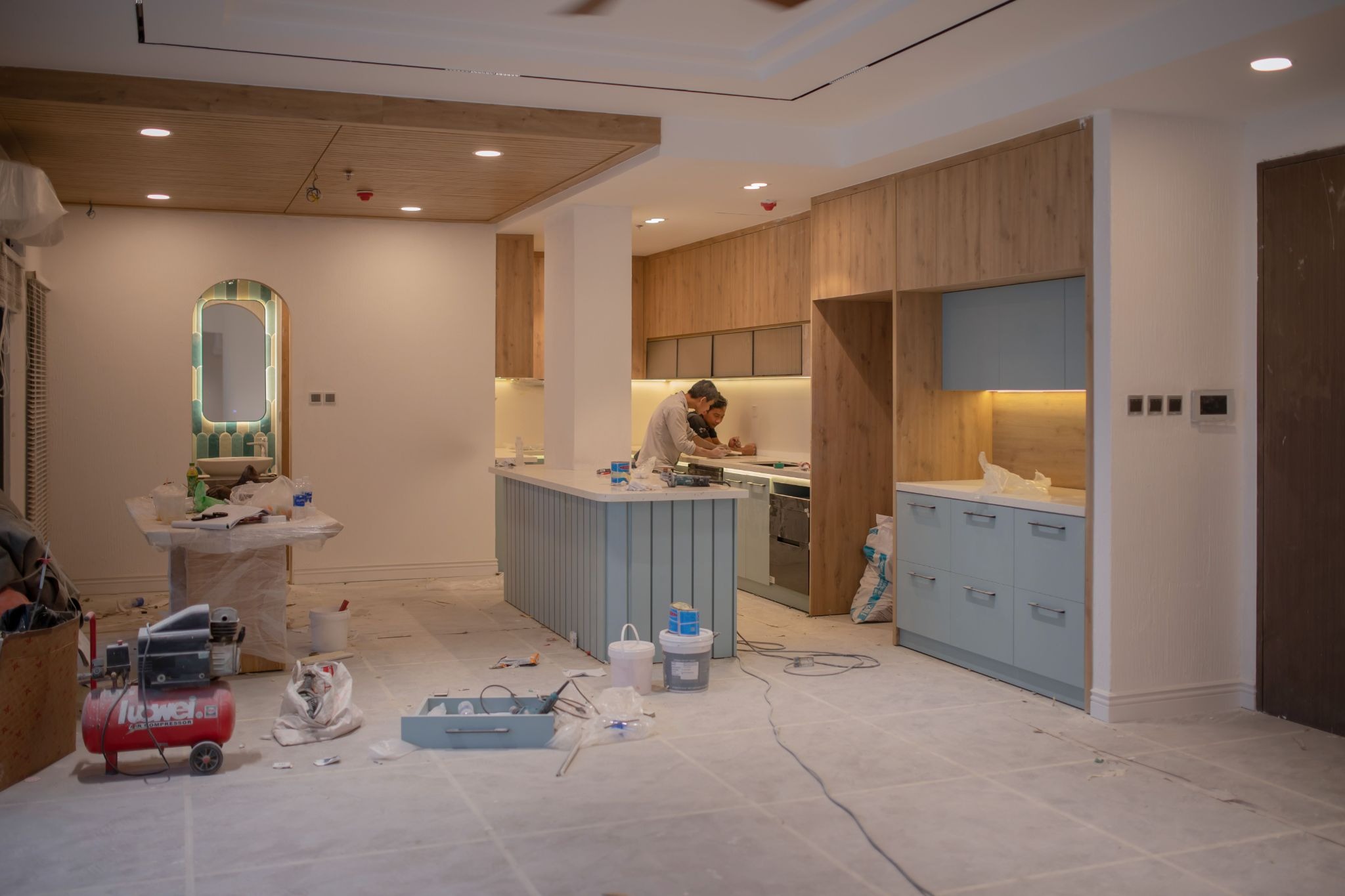
You don’t realize how much life revolves around your kitchen until you suddenly can’t use it.
A kitchen remodel disrupts meals, routines, storage, and general comfort. But with a little planning before demolition begins, the renovation period can be so much easier to manage.
What’s the best way to survive a kitchen remodel? Prepare before demolition begins. Set up a temporary kitchen, simplify meals, organize essential supplies, protect your home from dust, and keep realistic expectations about the timeline. These practical steps can make the renovation period far less stressful while you wait for your new kitchen to come together.
Whether your renovation lasts a few weeks or stretches into a long project, these practical tips will help make everyday life feel far less stressful and keep you focused on the dream kitchen that’s waiting on the other side.
1. Know What to Expect During the Remodel
The first few days usually feel exciting, as the cabinets come out, the walls open up, and you start seeing progress. Then reality quickly settles in.
Noisy construction, dust in every room, a relocated refrigerator, and no kitchen sink can cause serious disruption to your routines and peace of mind.
And even small tasks—like making toast or washing a coffee mug—suddenly need extra planning.
Most remodels also involve at least a few unexpected adjustments. For example, materials arrive later than expected, small design decisions pop up, and timelines get pushed back.
That doesn’t always mean anything is going wrong. Just know these inconveniences are normal and you’ll feel more prepared when they happen.
2. Set Up Your Temporary Kitchen Before Demo Day
One of the common mistakes we see with homeowners is waiting until demolition day to think about how cooking will work.
Instead, build your temporary kitchen several days beforehand so you have time to discover what’s missing.
You don’t need to recreate your entire kitchen, but you do need a functional place to prepare simple meals.
A temporary kitchen often includes:
- A folding table or sturdy countertop
- Microwave
- Toaster oven
- Coffee maker or coffee pot
- Electric kettle
- Air fryer
- Instant Pot or rice cooker
- Mini fridge or, if available, your old fridge
- Trash bin
- Paper towels
🛠️ Pro Insight: Set up your temporary kitchen a few days before demolition starts. You’ll quickly discover what you actually use every day, and what you can probably live without.
3. Choose the Right Location for Your Temporary Kitchen
The setup itself is important, but so is the location.
The best temporary kitchen should be safely away from the construction zone while still making everyday tasks convenient.
Here are a few location ideas:
- A dining room
- Family room
- Basement
- Laundry room
- Finished garage
If possible, choose a space close to electricity, your refrigerator, and a water source.
If your kitchen sink is unavailable, a laundry sink, utility sink, or even a bathroom sink can make washing dishes much easier than carrying everything across the house.
And keep the area away from heavy construction traffic so your family can exist peacefully outside the work zone.
4. Keep Meals Simple (and Your Budget Intact)
This might not be the month to experiment with elaborate recipes. Simple meals make the renovation much less stressful.
Before construction truly gets going, stock up on pantry items, canned goods, frozen meals, healthy snacks, and ingredients that require minimal prep.
Meals that work well during a remodel include:
- Sandwiches and wraps
- Salads
- Slow cooker meals
- Instant Pot recipes
- Air fryer dinners
- Oatmeal
- Yogurt and fruit
- Smoothies
Ordering food occasionally can help, but relying on takeout every night adds up fast on top of an already expensive renovation. Simple homemade meals save both time and budget.
5. Only Keep the Small Appliances You’ll Actually Use
Resist the urge to clutter your temporary kitchen by moving every appliance you own into it. Less is usually better when keeping stress down.
Choose only the countertop appliances you’ll use every day, such as:
- Microwave
- Coffee maker
- Air fryer
- Electric kettle
- Instant Pot
If weather allows, don’t forget your outdoor grill. It can become one of the most useful cooking appliances during the remodel.
Leave everything else packed away until your new kitchen is finished.
6. Organize Pantry Items and Everyday Essentials
When your kitchen is packed into boxes, finding basic items gets frustrating fast.
Instead of unpacking everything, organize your temporary kitchen around your daily routine.
Keep frequently used items together in categories:
- Coffee supplies
- Snacks
- Everyday dishes
- Utensils
- Pantry staples
Store specialty cookware, extra dishes, and less-used kitchen appliances elsewhere until the renovation is finished.
Clear bins and labeled boxes can make it easier to find what you need.
7. Protect the Rest of Your Home From Dust
Kitchen remodels have a habit of spreading beyond the kitchen. So before work begins, spend a little time protecting nearby rooms.
Here are some helpful strategies to keep things clean:
- Hanging plastic sheeting between rooms
- Closing doors whenever possible
- Covering nearby furniture
- Moving rugs away from the construction zone
- Running an air purifier
- Removing shoes before walking through the rest of the house
A little prep keeps the rest of your home feeling livable while the reno is underway.
8. Keep Kids and Pets Safe
Construction zones are like magnets for curious children and pets. It’s important to set clear boundaries about which areas are off-limits and create routines that keep everyone away from tools, dust, and unfinished work hazards.
Baby gates, closed doors, and designated pet areas can make a big difference.
9. Prepare for Life Without a Kitchen Sink
For pretty much anyone, losing the kitchen sink can be one of the biggest day-to-day adjustments. But fortunately, there are several workable solutions.
You can wash your dishes in laundry sinks, utility sinks, or bathroom sinks. Keep mild dish soap, dish towels, and a drying rack nearby.
During especially busy weeks, consider using paper plates or disposable plates occasionally to keep stress low during this transitional period.
10. Stay Organized, and Focus on the Finish Line
We’ll be the first to admit it: most remodels don’t go exactly according to schedule. Small delays do happen, from materials arriving late to contractor installations getting rescheduled.
To help you stay sane, focus on progress as much as your calendar.
Celebrate milestones, like when new cabinets are fully installed or when beautiful new appliances are delivered. Even appreciating a colorful new backsplash can keep your spirits up when things don’t go according to plan.
🛠️ Pro Insight: A couple years later, most homeowners don’t remember whether their remodel took a couple extra weeks. They remember how much they loved that finished kitchen.
Best Advice for Getting Through a Kitchen Remodel
We get it, living without a fully functional kitchen isn’t easy. But it is temporary, and the final result is totally worth it.
Setting up a functional temporary kitchen, simplifying your daily cooking routines, protecting the rest of your home, and staying flexible when small delays happen can make the entire experience less overwhelming.
Before long, you’ll be drinking your morning coffee in the kitchen you dreamed of when this project first started.
Thinking about ordering your new cabinets online?
💡See How Our Cabinet Ordering Works
How iCabinetry Can Help Make Your Remodel Easier
While every renovation comes with temporary disruption, thoughtful planning makes the entire process smoother.
Choosing your cabinet layout early, reviewing project details carefully, and selecting quality cabinetry before construction begins can help prevent unnecessary surprises later.
Whether you’re comparing cabinet styles, exploring storage options, or requesting a quote, iCabinetry helps homeowners and contractors move into their renovation with greater confidence.
💭 Shop for Your Dream Cabinets
✨ Get Inspired by Customer Kitchens
FAQs about How to Survive a Kitchen Remodel
Most homeowners create a temporary kitchen in another room using small appliances like a microwave, coffee maker, toaster oven, or air fryer while relying on simple meals until the renovation is complete. If the renovation is especially extensive, some homeowners choose to rent temporary accommodations until the project is complete.
Choose a space outside the construction zone with access to electricity and, if possible, water. Equip it with only the appliances and supplies you use every day to keep it functional and uncluttered.
Avoid packing away frequently used items, relying on takeout for every meal, or overcrowding your temporary kitchen with unnecessary appliances.
Planning simple homemade meals ahead of time, stocking pantry staples, and using versatile appliances like an air fryer, Instant Pot, microwave, or outdoor grill can make mealtimes much easier.
Preparing your temporary kitchen before demolition, keeping daily routines simple, communicating regularly with your contractor, and focusing on steady progress instead of small delays can make the renovation much more manageable.