You’ve figured out the countertop. Picked the stools. Maybe you even know exactly what pendant lights are going above it.
Then someone asks:
“What cabinets are going inside the island?”
And suddenly you realize the island isn’t just an island anymore.
It’s where groceries get dropped after work. Where kids spread out homework. Where friends lean with a glass of wine while you cook. It’s a prep station, storage hub, serving area, and social space all wrapped into one.
And if the cabinets underneath don’t support how you actually live, the whole thing starts feeling awkward surprisingly fast.
The best kitchen island cabinets depend on how the island will actually be used. Storage needs, seating, prep space, appliances, traffic flow, and design style all affect the right cabinet layout. A well-designed island should support everyday life while fitting naturally into the kitchen’s workflow, storage needs, and overall design.
Here’s how to choose kitchen island cabinets that work beautifully now—and still make sense years from now.
Consider Overall Function
The best kitchen islands usually have one thing in common: they know what job they’re doing.
Because an island used mostly for meal prep looks very different from one used for entertaining, casual homework sessions, or simply extra storage.
For some homeowners, the island is the ultimate meal prep station—with cutting boards, ingredients, and appliances spread out across the counter every night. In this case, having deep drawers, trash pullouts, and easy-access storage is incredibly useful.
But other homeowners use the island more like a social hub, where guests gather, and kids do their homework. It becomes casual dining, serving space, and extra storage all at once.
So before you dive into choosing the cabinets, get clear on this: What happens here most often?
That will determine the cabinet layout faster than the kind of aesthetics you like.
Already planning your island remodel?
👉 Get a free kitchen quote before locking in your decision.
Choose the Right Island Size and Cabinet Layout
Let’s face it: those giant marble-countertop islands are so easy to fall in love with.
Until you get one and realize it takes up half the room. Island cabinets should fit the kitchen, not the other way around.
Think about how much floor space you actually have, where appliances open, where people walk, and whether stools need to fit around the perimeter. An oversized island is the fastest way to make a kitchen feel cramped in a galley, L-shaped, or small layout.
We love oversized islands too, but sometimes the better choice is a smarter island.
Slightly smaller islands with deeper drawers and better organization will often outperform an oversized island that’s filled with wasted space.
The layout stage is also when many homeowners start narrowing down cabinet configurations and storage options.
👉 Get a free kitchen quote before finalizing your island layout
Plan Around Kitchen Workflow and Traffic Flow
A kitchen island should make the space easier to use and move around in, not more complicated.
This is where traffic flow starts to matter. Think about what happens when someone opens the fridge, pulls something from the oven, unloads the dishwasher, or sits down at the island while someone else is cooking.
If the island is too close to the surrounding cabinets or appliances, the whole kitchen will become one big traffic jam with pretty countertops.
Make sure:
- Cabinet doors and drawers have room to open fully.
- Stools have space to pull out with room to spare.
- Walkways stay clear enough for more than one person to move through comfortably.
Surprisingly, this matters even more in open-concept spaces where the kitchen connects to a living or dining area. A well-designed island can act like an anchor that defines zones, and a poorly planned island can interrupt the entire flow of the room.
Prioritize Storage Needs
“More storage” sounds great until you realize none of it fits the things you actually use every day.
Kitchen island cabinets quickly become home to all the awkward items: a stand mixer, sheet pans, serving platters, snack bins, and the giant pot you only use on Thanksgiving.
To prevent this, start by asking yourself what you actually want to grab easily from the island.
For example, if it’s your main prep area, deep drawers, tray dividers, utensil storage, and a trash pullout can make cooking so much easier.
But if it’s more of a serving or entertaining space, you might want storage for platters, barware, linens, or pantry overflow.
Focus on useful storage, not “maximum” storage.
Decide Between Drawers, Doors, and Open Shelving
Lucky for your wallet, kitchen island cabinets don’t need to be everything at once! You can choose between options that suit you: drawers, doors, and open shelving are the main design choices.
- Drawers. Drawers are usually the most practical choice for daily-use items because you can see and reach what’s inside without crouching or digging. They work especially well for cookware, utensils, mixing bowls, food prep tools, and smaller appliances.
- Cabinet doors. Cabinet doors still make sense for larger items or less-used storage, especially if you’re trying to keep costs more controlled.
- Open shelving. Open shelving can make things more visually interesting and give you easy access to cookbooks, baskets, or display pieces. But it does require a little styling discipline. Open shelving is charming—until it becomes a collection spot for random clutter.
For many islands, a mix works best: drawers where you need access, closed storage where you need function, and open shelving only where it adds a flair of style.
Account for Seating and Countertop Overhang
If your island is going to include seating, the cabinetry needs to work around that from the start.
Here’s what to consider:
- Legroom
- Countertop overhang
- Stool depth
- Whether people can sit without blocking cabinet doors, drawers, or walkways.
These details may seem small on paper, but they become very annoying in real life.
A beautiful island isn’t very useful if no one actually feels comfortable sitting at it.
If casual dining is part of the plan, seating should feel comfortable and natural, not squeezed in as an afterthought. The storage side and seating side of the island should each have enough room to be effective.
Plan Cabinets Around Appliances, Sinks, and Outlets
Once you add a sink, cooktop, dishwasher, microwave, wine fridge, or outlet to the island, the cabinet plan gets more specific.
Appliances and plumbing take up space, wiring needs to be planned, and ventilation may even become a factor.
This is where a quote or cabinet planning conversation can be so useful. It gives our team enough project details to help point you toward cabinet options that fit your real-life space and daily living.
👉 Planning an island with appliances, outlets, or a sink?
Get a free kitchen quote before ordering your cabinets.
Consider Design Style
After you’ve figured out all the logistics, the design style phase is usually where people start falling in love with their island.
Imagine this:
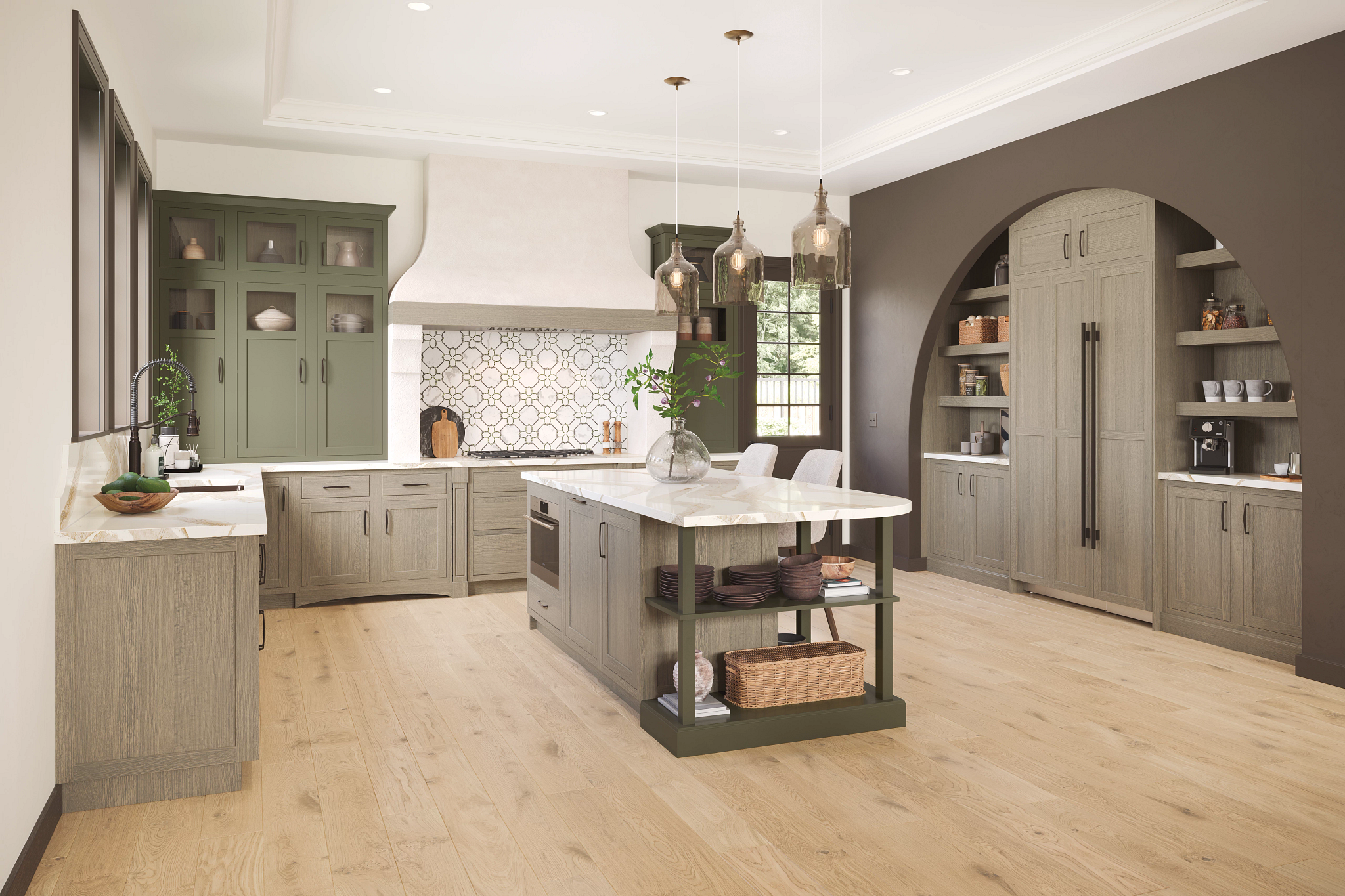
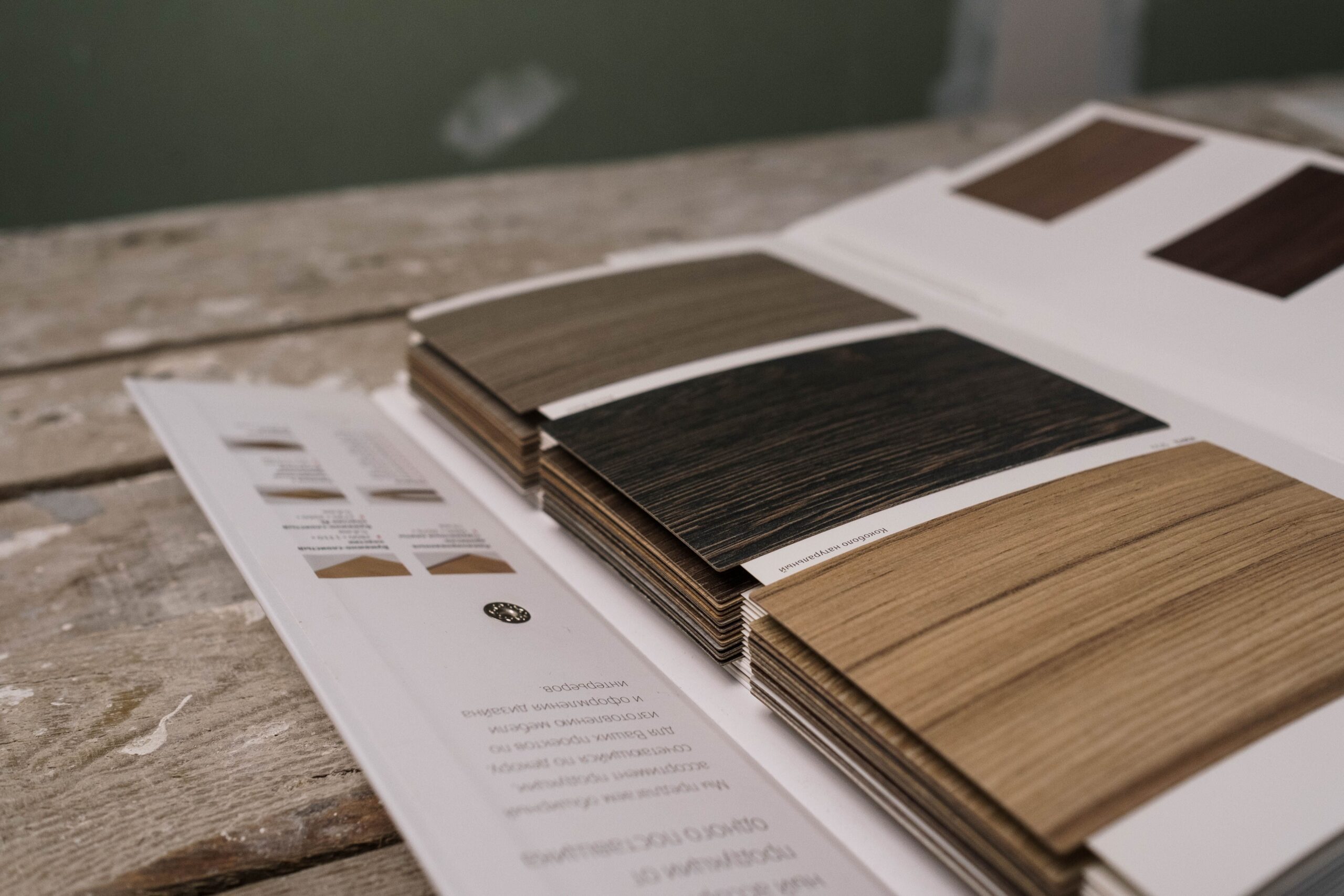
- Natural wood island with visible grain
- Deep navy painted finish
- Sleek slab cabinets beneath a waterfall countertop
- Warm shaker island that feels like home
That style excitement is important because the island can absolutely be the focal point of the kitchen.
But before you dream up a completely new look, make sure the design still feels connected to the rest of the kitchen. The cabinet door profile, color, finish, hardware, countertop, backsplash, and surrounding cabinets should feel like they’re woven into the personality of the kitchen’s other features.
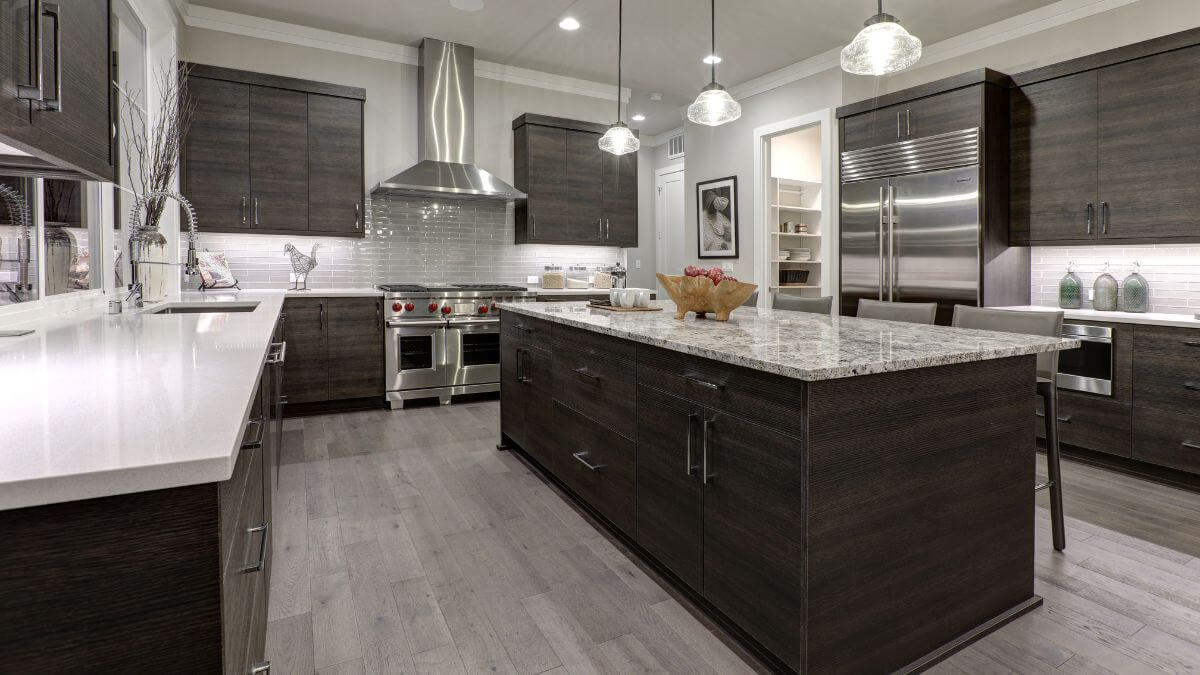
- Modern kitchens usually work well with slab cabinets, flat surfaces, clean lines, and minimal hardware.
- Transitional kitchens often look beautiful with shaker cabinets because they feel timeless without leaning too traditional.
- Traditional kitchens tend to pair well with richer wood tones, decorative hardware, furniture-style details, and more classic cabinet profiles that make the island feel warm and established.
A natural wood island paired with painted perimeter cabinets is another great choice if you want to bring some warmth, without making the whole kitchen look too dramatic.
If you’re considering a wood-forward island, Natural Wood Kitchen Cabinets is a smart next read.
Select Durable Materials for a High-Use Island
Kitchen islands are well-loved and heavily used. People lean on them, kids do homework there, and a lot of life happens around them.
That’s why durability is so essential for island cabinets.
Look for cabinet materials, construction, and finishes that can handle daily use. Solid wood and high-quality hardwood cabinetry are excellent options for islands, because they age beautifully and bring warmth to the heart of the kitchen.
Collections like iStyle Hardwoods offer highly durable, warm cabinet styles for kitchen islands.
🛠️Pro Insight: If you’re going to invest in a higher-quality cabinet feature somewhere, the island is a smart place to do it. It usually gets the most attention and the most wear.
Match or Contrast Your Island Cabinets With the Kitchen
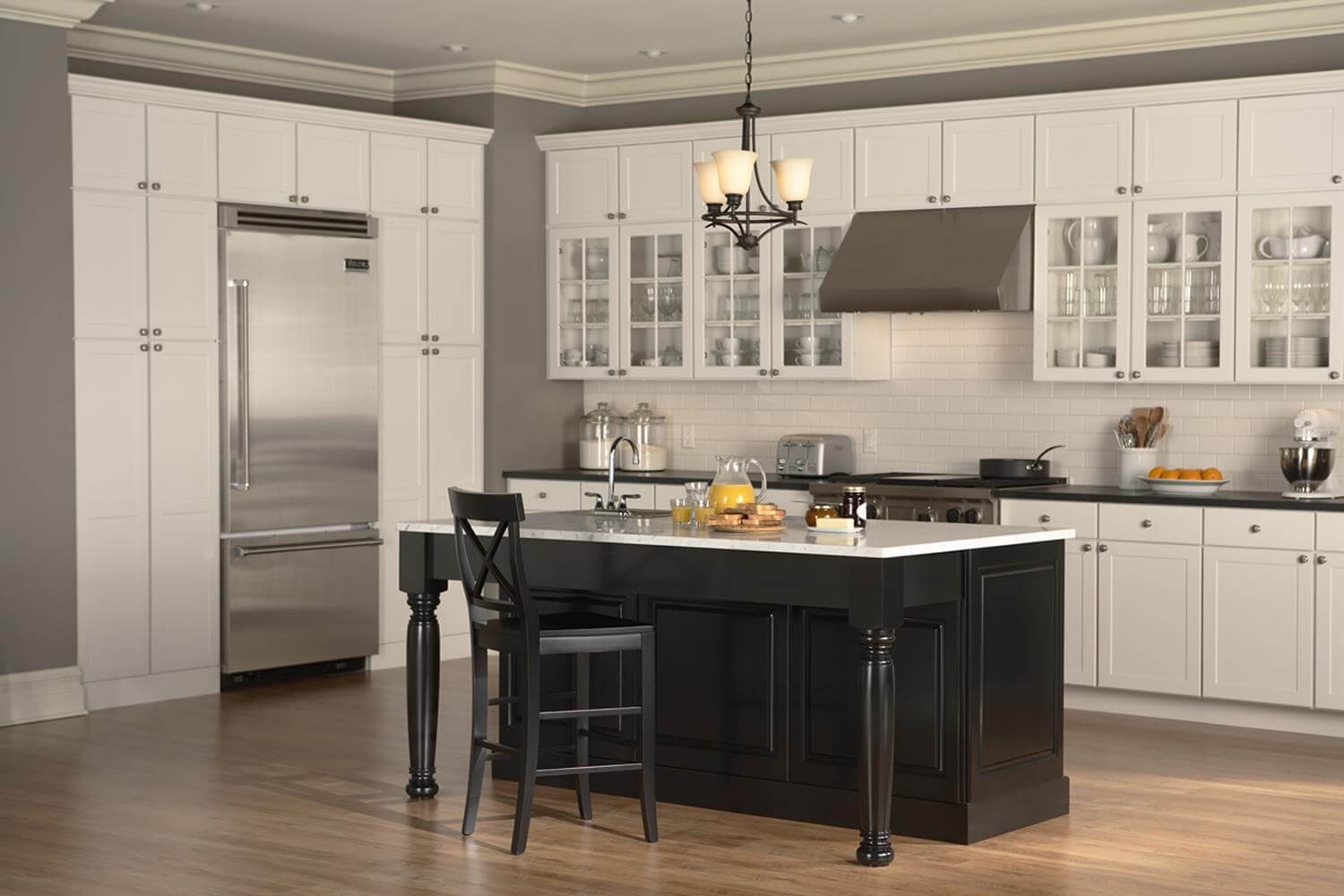
Your island cabinets can either match the rest of the kitchen or contrast with it.
If you want a matching look, coordinate the island with the perimeter cabinets to create a softer, seamless look. This can work amazingly well in smaller kitchens or spaces where you want the room to feel calm and cohesive.
And if you want to create a bit more visual interest, opt for a contrasting island. Contrasting can make the island feel like a true central hub, especially in open-concept designs where the kitchen connects to a living or dining area.
Some popular contrast combos include white perimeter cabinets with a natural wood island, painted cabinets with a dark island, or warm neutrals paired with a richer stained finish.
Choose the Right Cabinet Door Style for the Island
Cabinet door style is more influential than you might think—it can actually change the whole personality of the island.
Here are some cabinet door styles to consider:
- Slab cabinet doors feel clean, modern, and minimal. They work well if you want the island to feel sleek and a bit luxurious.
- Shaker cabinets offer a more flexible design look, depending on how you dress them up. They can lean modern, farmhouse, transitional, or classic depending on the finish, hardware, and countertop (and that’s why we love them!).
- Inset cabinets create a more custom, furniture-like look. They can be beautiful on an island because the piece starts to feel less like a cabinet run and more like a built-in feature.
More detailed cabinet doors can work too in traditional or transitional kitchens, but they should be balanced with the rest of the room so the island doesn’t feel busy.
If style is the decision you’re stuck on, our Guide to 7 Kitchen Cabinet Styles can help you compare options before choosing.
Use Color and Finish to Define the Island
Color and finish can turn a kitchen island into the star of the room.
White, gray, navy, black, natural wood, and warm neutral finishes can all work beautifully.
The right choice usually depends on the rest of the kitchen: flooring, countertops, backsplash, wall color, natural light, and surrounding cabinets.
Natural wood is great for islands because it adds warmth and texture without needing a bold paint color.
A stained wood island can make a modern kitchen feel less dramatic, and a traditional kitchen feel more subtle.
And painted finishes are good for when you want a contrasting island.
Navy, charcoal, or deep green islands can look beautiful. But before you pick one of these, just know that if your kitchen doesn’t have ample natural light, these may make the kitchen look a bit heavy.
Consider Hardware Options
Cabinet hardware may seem small, but it changes how the island looks and feels.
A kitchen island usually gets a lot of daily use, so hardware should feel good and make drawers and cabinet doors easy to open.
Long pulls can work well on deep drawers. And knobs or smaller pulls may feel better on doors or traditional cabinet styles.
Hardware should also coordinate nicely with the rest of the kitchen. It doesn’t have to match every finish perfectly, but it shouldn’t stick out too much next to the lighting, appliances, and cabinet color.
We’d also recommend soft-close hinges and drawer slides for your island cabinets. Once you get used to soft-close drawers, slamming will be just a distant memory.
Make Cabinets Accessible From Every Side
One of the best things about a kitchen island is that it offers storage from more than one side.
Depending on your layout, you might use storage on the working side, the seating side, or even the ends of the island. This is great for items you don’t need every day, like serving dishes, seasonal pieces, cookbooks, or extra linens.
But access should be planned around how people will realistically use the island. Storage behind stools probably isn’t the most convenient for daily cookware. And end cabinets might be better suited for less-used items.
The more intentional the access points are, the more useful the island becomes.
Add Interior Organizers and Storage Features
Interior organizers can make island cabinets feel truly custom.
Deep drawers are a great start, but these features could take it to the next level:
- Pull-out shelves
- Tray dividers
- Spice storage
- Drawer organizers
- Trash pullouts
- Hidden appliance storage
With these upgrades, the island will serve multiple purposes. You could be storing prep tools, baking supplies, small appliances, and serving pieces all in the same zone.
Good organizers keep the island from becoming one giant cabinet cave. We’ve all had one, and no one needs that.
Think About Cleaning and Maintenance
Kitchen islands collect everything: fingerprints, spills, crumbs, scuffs, scratches, and mysterious smears. So yes, cabinet finish really does matter.
If your household cooks often, entertains frequently, or has kids, choose finishes that are realistic for daily life.
Matte and dark finishes can look beautiful, but show fingerprints and dust more. Natural wood can hide wear a little better because the grain adds natural variation and texture.
Also consider cabinet door style. Simpler profiles like slab doors are easier to wipe down, while detailed doors collect more residue around grooves and edges.
Common Mistakes When Choosing Kitchen Island Cabinets
Most kitchen island mistakes happen when style gets prioritized over functionality. Here are a few common ones to watch out for:
- Choosing cabinets before measuring carefully
- Forgetting seating clearance
- Ignoring traffic flow
- Adding too little storage
- Choosing all doors and no drawers
- Picking a finish that clashes with the rest of the kitchen
- Forgetting appliance and outlet needs
And if we could tell you to avoid just one thing, it would be treating the island like extra counter space. Because in reality, it’s one of the hardest-working zones in the kitchen. And the cabinets underneath need to be planned with that in mind.
Choose Kitchen Island Cabinets That Fit Your Life
The best kitchen islands aren’t always oversized or trendy. They’re the ones that support you in the way you live now—whether that’s cooking, gathering, homework, or hosting loved ones.
Choose island cabinets based on function first, storage second, and style third.
Done well, the island stops feeling like extra counter space and becomes the heart of the whole kitchen.
Ready to compare island cabinet options?
→ Shop all cabinet lines for inspiration
→ Explore iStyle Hardwoods for a natural island
→ Get a free kitchen quote to start your remodel
FAQs about Choosing the Right Cabinets for Your Kitchen Island
What type of cabinets are best for a kitchen island?
Deep drawers and mixed storage layouts often work best because they improve access and support multiple uses.
Should kitchen island cabinets match the rest of the kitchen?
Not necessarily. Matching creates cohesion, while contrast can turn the island into a focal point.
How much storage should a kitchen island have?
Enough to support its main purpose: prep space, cooking, entertaining, or everyday storage.
Can a kitchen island include both cabinets and seating?
Absolutely. Many islands combine storage and casual dining successfully.
What cabinet style works best for a modern kitchen island?
Slab cabinets and simpler shaker profiles tend to work especially well in modern kitchens.