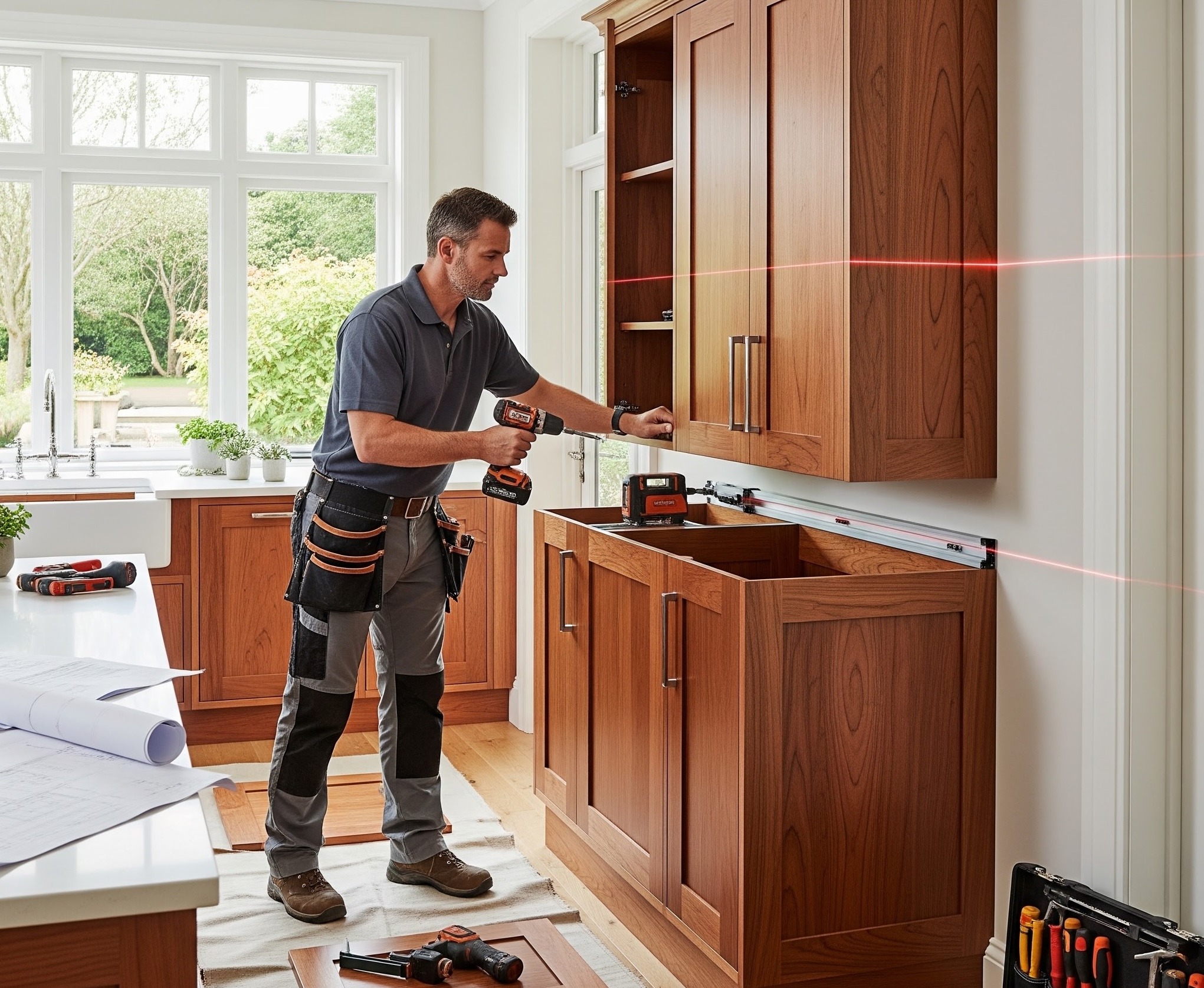
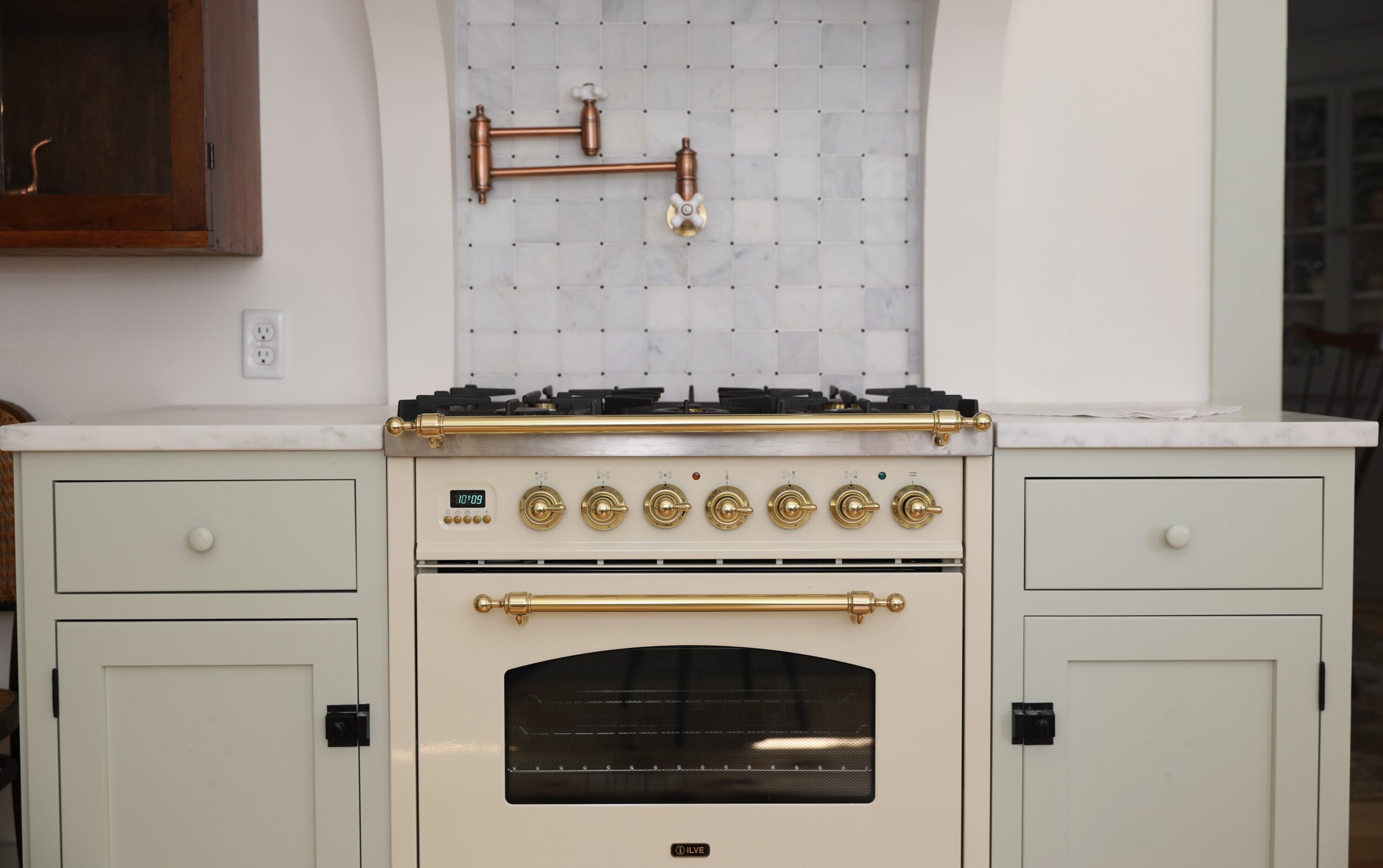
The right cabinet door can turn your home into a masterclass in style and functionality. This article will explore the charms and strengths of the 5 most common types of kitchen cabinet doors so that you can confidently shop iCabinetry Direct’s large selection of high-quality cabinetry, all curated to reflect different design aesthetics.
Recessed panel cabinet doors add subtle depth to your kitchen through their softly contoured fronts. A flat panel is fit into the frame, then surrounded by stiles and rails to add visual appeal.
1. Recessed Panel Doors
Perfect for vintage-inspired spaces like transitional kitchens and farmhouse kitchens, these are ideal for homeowners who want a versatile kitchen cabinet style with minimal upkeep. Choose full overlay doors to accentuate these subtle details, or consider inset cabinet doors for a more classic look.
2. Raised Panel Doors
If you prefer the romantic ornamentation of classic American or colonial-style homes, then raised panel doors may be the perfect cabinet door style for your needs. Unlike recessed-panel cabinet doors, raised-panel cabinet doors feature a raised center panel that rises above the face frame, making them stand out more.
If you lean toward contemporary styles, consider neutral painted finishes, or embrace the traditional cabinet look with stained solid wood. To maximize the classic feel, consider partial overlay doors, where part of the door frame is visible.
3. Slab Cabinet Doors
Also known as flat-panel cabinets, slab doors are the most popular cabinet door style for minimalist kitchens and open-plan homes. These feature a flat center panel with no framing. There are no decorative panels to distract from your other design choices, such as high-gloss laminate or natural wood grain veneer. Slab doors are the premier choice for busy modern kitchens, as they are easy to clean.
Flat-panel doors are a perfect complement to frameless cabinets, which typically have full-overlay cabinet doors. The doors attach directly to the cabinet frame rather than to a face frame. Not only does this mean you can fully access all the interior space, but it further accentuates the clean lines that typify slab doors.
4. Shaker Cabinet Doors
Inspired by 18th-century Shaker craftsmanship, Shaker-style cabinets have remained a perennial favorite due to their versatility. Shaker doors look at home in almost any kitchen, whether you learn toward sleek industrial elegance or colorful coastal chic.
For even further visual appeal, consider combining the Shaker style with beadboard cabinet doors. Shaker-style doors are also a popular option for inset doors, where the door sits flush with the cabinet face frame.
5. Glass Panel Doors
Glass panel doors are an excellent way to brighten a smaller kitchen without needing a full remodel. The glass insert will reflect light, visually expanding the space and adding a touch of elegance. These are best for upper cabinets to avoid any breakage.
When you buy kitchen cabinets online with iCabinetry Direct, we will walk you through the many options available for glass panel doors. You can choose between frosted, clear, and textured glass, each with its own strengths. Frosted and textured glass are great for privacy, while clear glass proudly showcases your storage space. Additionally, consider whether you’d like mullion doors, which have decorative moldings overlaying the glass center panel.
Choosing the Right Kitchen Cabinet Door Style
The right cabinet door style can completely revitalize your kitchen or dining space. Different cabinet door types work best depending on your layout, lighting, and color palette.
Heavily ornamented types of cabinet doors, like recessed or raised panels, may be overwhelming in a small, galley-style kitchen with little natural light. If you have an open floor plan, raised-panel cabinet doors can strike a perfect balance between classic and contemporary aesthetics.
You’ll also want to consider colors and textures. For example, a sleek marble countertop would look stunning with dark slab cabinets.
Best Materials for Long-Lasting Cabinet Doors
The cabinet material will significantly impact longevity and finish quality, making it crucial to choose the right one for your needs. Consider these popular options; our helpful cabinetry experts can also help you decide which one is best for you.
- Solid Wood: A premier choice for any cabinetry, wood provides a warm, rustic touch. With proper care, wood cabinets can last for decades without cracking or warping.
- Medium-Density Fiberboard (MDF): This material is both stronger and more budget-friendly than wood due to its rigorous manufacturing process. MDF is ideal for painted finishes because it provides a perfectly smooth surface.
- Thermofoil: Thermofoil combines the strength of MDF with the endless customization options of laminate veneer. A thin layer of vinyl laminate is heat-sealed to an MDF backing, creating a highly durable and water-resistant product. Thermofoil can mimic many natural materials, such as wood or marble, and is very resistant to scratches and humidity.
Cabinet Door Finishes: Matte, Glossy, and Textured
You also have many options when it comes to finishes, whether that is painted or stained. Consider these three fan favorites, including their pros and cons.
- Matte Finish: This smooth, subtle finish is a popular option for modern or transitional aesthetics, especially as it hides smudges and fingerprints. Consider this for a farmhouse chic, especially if paired with wood accents or brass handles. However, it can make a room look darker because it is not reflective, and it may be more prone to cracks or chips.
- Glossy Finish: Highly reflective gloss finishes brighten up a small space and add a touch of sophistication, especially if done in darker shades. It’s a favorite for contemporary aesthetics, especially if paired with matte hardware. However, gloss finishes must be cleaned regularly, as smudges will be very obvious. The finish needs to be professionally applied, as it does not tolerate imperfections.
- Textured Finish: Ideal for busy families, textured finishes hide smudges and can blend seamlessly into any design tradition, whether modern or classic. They also add more visual appeal to a room and are highly durable. However, textured finishes can be hard to clean, sometimes even requiring a toothbrush or compressed air.
Cost Comparison Between Door Types
Of the door types, slab is typically the most budget-friendly as it does not require any additional millwork or detailing. Shaker doors and recessed panels are in the moderate price range; they are simple and beautiful, but do require more labor than plain flat panels.
Raised panel styles require labor, making them a pricier option. Lastly, glass panel cabinets, especially with frosting or texture, are going to be the most expensive, because the glass must be carefully cut and set into the panel for a perfect fit.
Maintenance and Cleaning Tips for Cabinet Doors
Each door type has its own care and cleaning requirements, which can help your cabinets stay beautiful for years to come.
- Recessed Panels: Remove loose dust and dirt using a duster, then use a gentle cleaning solution of mild dish soap and water. Wipe gently with a clean microfiber cloth. You can use a toothbrush, cotton swab, or paintbrush to access grooves and corners.
- Raised Panels: After dusting the panel, use a mild cleaning solution to wipe down the details. You can use a toothbrush or a small cloth to clear the grooves. Wipe down immediately. Don’t use abrasive cleaners or scouring pads.
- Slab Panels: The easiest type of cabinet to clean; simply wipe them down with a mild cleaning solution and a clean cloth. Be sure to dry the door thoroughly and never scrub.
- Shaker Doors: As with recessed panels, use a mild cleaning solution and a cloth to wipe down the surface, then run a dampened cotton swab along the grooves to clear any dust or debris.
- Glass Panel Doors: Use a mild soap or window cleaning solution and a microfiber cloth. Be sure to dry the crevices between the insert and the cabinet frame to avoid damage.
In addition to regular cleaning, check the drawer and door alignment regularly to ensure everything is hanging properly. Tighten or loosen the hinge screws as needed, checking that the door hangs straight. With drawers, you can adjust them up or down using the tilt levers at the back of the drawer slide.
Most cabinets only need to be refinished every 10 years, but some materials or cabinets in high-traffic areas may need to be refinished sooner. Quickly repair any cracks or chips in the finish to avoid further damage.
Moisture levels also matter. Install a moisture meter in your kitchen to ensure that the humidity stays below 50%. If you live in a humid climate, use a dehumidifier to prevent your cabinets from warping or sagging.
FAQs about Kitchen Cabinet Door Styles
Raised panel is typically considered the most durable because it requires careful craftsmanship, and the glue between the stiles and rails helps to stabilize the entire door. However, the material and craftsmanship quality will also determine how durable your cabinet door is. MDF and plywood are often the most durable, especially if your cabinet will be handling heavy loads.
Absolutely. Shaker cabinets have been stylish since the 18th century because of their simplicity, versatility, and solid design. The finish and hardware you select can completely revitalize your cabinets, turning them from a traditional look to something more modern.
When determining the right color for your kitchen, consider how much natural light the room receives daily and its overall size. If it’s a small kitchen with little natural light, then a lighter color will help to brighten up the space and prevent it from feeling cramped.
If you have a larger kitchen with abundant natural light, you can choose darker colors or more intricate details. However, dark colors can also work in smaller kitchens if you have abundant light sources.
Get paint samples and leave them in the room for a few days, checking how they look under different lighting conditions. You should also consider how they complement or contrast with other fixtures, like flooring and countertops.
Glass doors can be a great way to visually open the space by reflecting more light. This is especially helpful for smaller spaces. If you choose clear panels, you can showcase your most treasured belongings, such as decorative plates.
However, you will need to clean the glass regularly to maintain a neat, orderly appearance. Glass cabinet doors may also not be a good choice if you have a fast-paced household, as the glass might get accidentally broken.
Yes, this is a very popular option. You might choose one type of door for the kitchen island and another set for the perimeter, or contrast the base and uppers. Be sure you use the same hardware finish to maintain visual harmony.
If you want more contrast but would like to keep the same style, you can consider a two-tone kitchen, where you use different colors or finishes for different cabinet sets.