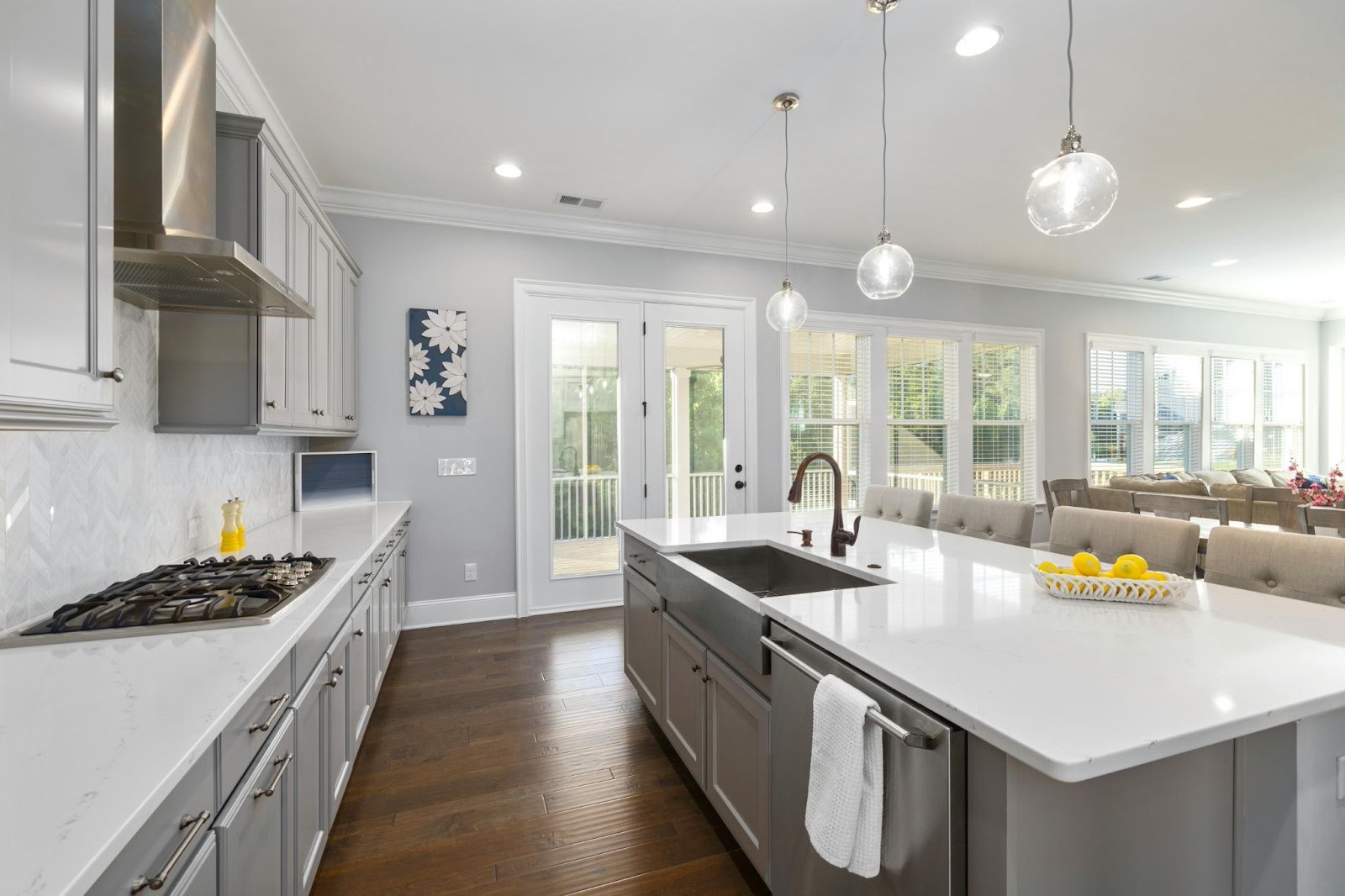
Open-concept homes have changed the way kitchens are designed. Instead of being a separate room behind walls and doorways, the kitchen is now part of the larger living space, from the dining area to the living room and beyond. In these layouts, cabinets are so much more than storage—they enhance the entire feel and utility of the space.
Open concept kitchen cabinets work best when they balance helpful storage and visual openness. The right cabinet layout, heights, finishes, and storage solutions create a seamless flow between the kitchen and connected living spaces. They also keep the cooking zone practical and clutter-free.
In this guide, we’ll explore design ideas for cabinets that support that openness, rather than interrupt it. We’ll cover everything from layout planning and kitchen islands to finish coordination and storage solutions that keep your kitchen breathable and clear. Let’s dive in!
Why Cabinet Choices Matter in Open-Concept Kitchens
In an open floor plan, cabinets do more than hold your favorite coffee mugs. They affect how the entire room works for your lifestyle and tastes.
Without walls separating rooms, cabinetry becomes the visual structure that helps define zones between the kitchen, dining areas, and living room.
Think about it this way:
- Cabinets help define where the cooking zone starts
- Kitchen islands create a natural transition to the living or dining area
- Tall pantry cabinets anchor one side of the room
- Open shelving keeps the kitchen from feeling boxed in
When cabinets are placed thoughtfully, the kitchen blends into the surrounding living spaces. When they’re not, the whole room can feel heavy or awkward.
Many homeowners notice this immediately when they walk into a poorly planned open layout. In these spaces, the cabinets dominate the room instead of complementing it.
Our goal is to achieve practical storage and visual balance.
Choosing Cabinet Layouts That Support Flow and Function
Cabinet layout becomes even more important in an open concept kitchen because people are constantly moving through the space. Kids grab snacks, guests stand around the island, and residents pacing between the living room and the dining area.
If cabinets block that natural movement, the room quickly feels cramped.
A good cabinet layout usually follows a few simple design principles:
- Keep tall cabinets in one area
Large features like tall pantry cabinets look best when grouped together along a single wall.
This keeps the bulkier visuals contained to one area, helping to make the rest of the kitchen feel more open.
- Clear your walkways
Leave enough floor space around islands and cabinets so people can move comfortably and safely between rooms.
Common trouble spots include:
- Narrow gaps between islands and cabinets
- Tall cabinets near entryways
- Appliances blocking major walk paths
- Prioritize prep space
Even in an open kitchen, functionality is vital.
Make sure there’s enough prep space near the sink and cooking area so everyday cooking still feels practical.
Using Kitchen Islands to Connect Spaces Seamlessly
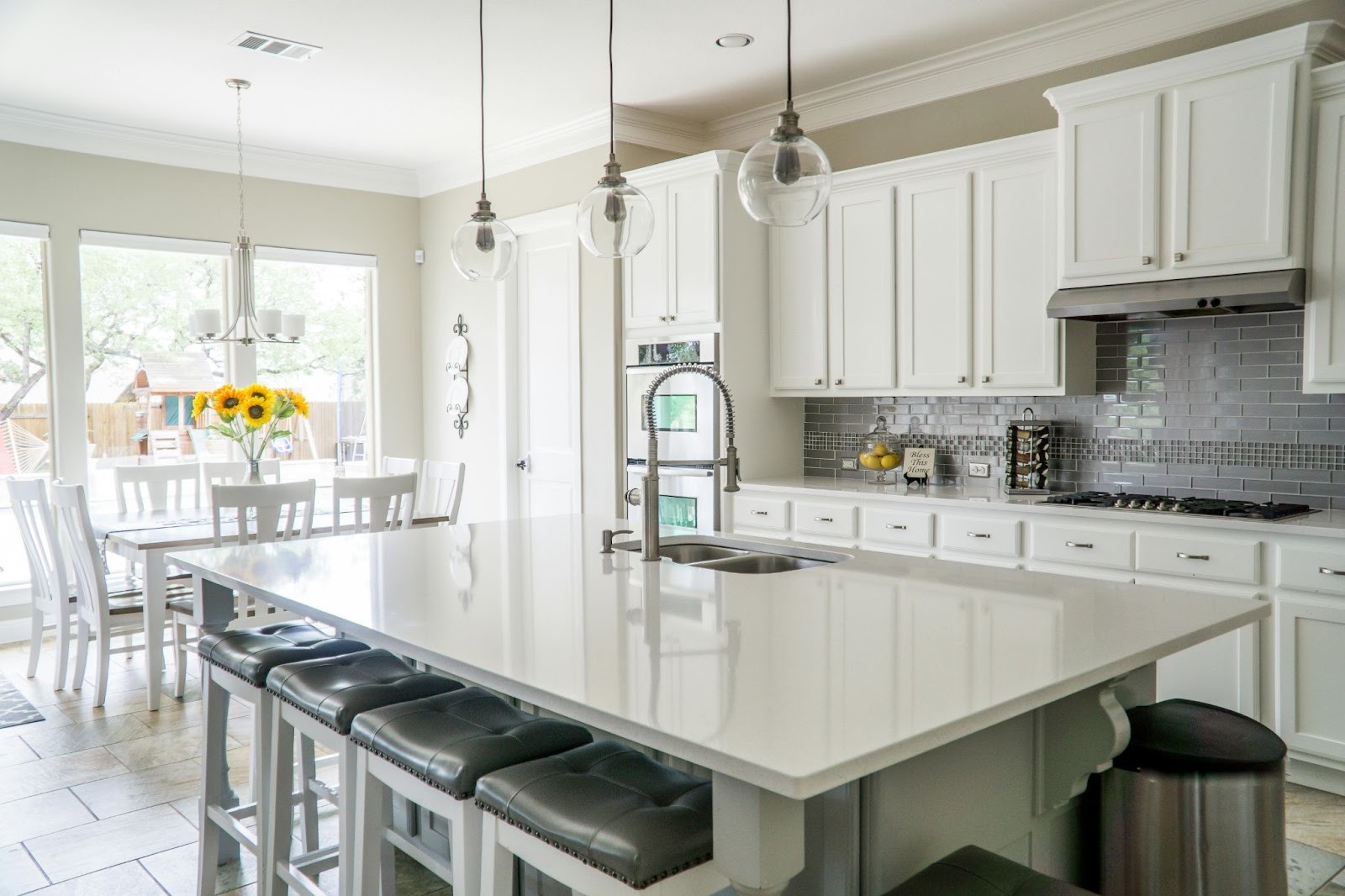
In most open concept kitchens, the island becomes the social heart of the home.
It’s where people love to sit and chat during dinner prep, set down groceries, eat breakfast, and gather during parties.
That’s why kitchen islands are the perfect bridge between the kitchen and the living room.
A well-designed island does a lot:
- Provides extra storage
- Adds casual seating
- Increases prep space
- Visually connects the kitchen with surrounding rooms
That’s why we see many homeowners now designing multi-functional islands that are equipped for both cooking and entertaining.
Inside the island, cabinets can include:
- Deep drawers for cookware
- Storage for cutting boards
- Pull-out trash bins
- Space for everyday dishes
These kitchen island cabinet features help keep the main counters tidy while still keeping items within easy access.
Cabinet Height and Placement for a Balanced Open Look
One of the biggest design questions in an open concept kitchen is this: how many upper cabinets should we include?
Too many, and the kitchen can feel closed in. But too few, and you lose valuable storage.
Here are some approaches designers often use:
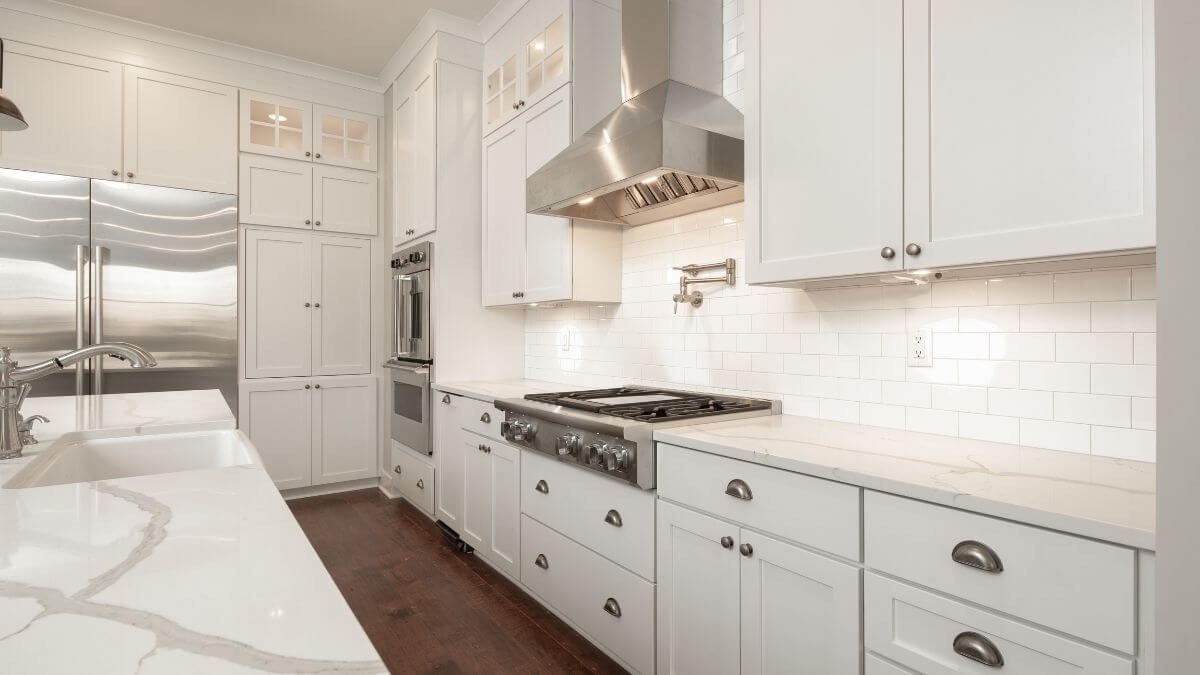
Ceiling-height cabinets
Extending upper cabinets to the ceiling creates a clean, streamlined look.
This works especially well when cabinets have clean lines, slab door styles, and neutral finishes. Think minimalist modern kitchen styles.
It can also eliminate the dust-collecting gap above cabinets.
Pro Insight: Still deciding if ceiling-high cabinets are worth it or overkill? Get help deciding with this quick guide.
Mixed cabinetry
Another option is mixing and matching cabinet types, like:
- Open shelving for everyday dishes
- Glass front cabinets to display decorative items
- Standard upper cabinets for concealed storage
This combination promotes an open and airy feel while still providing enough storage.
Coordinating Cabinet Finishes With Adjacent Living Spaces
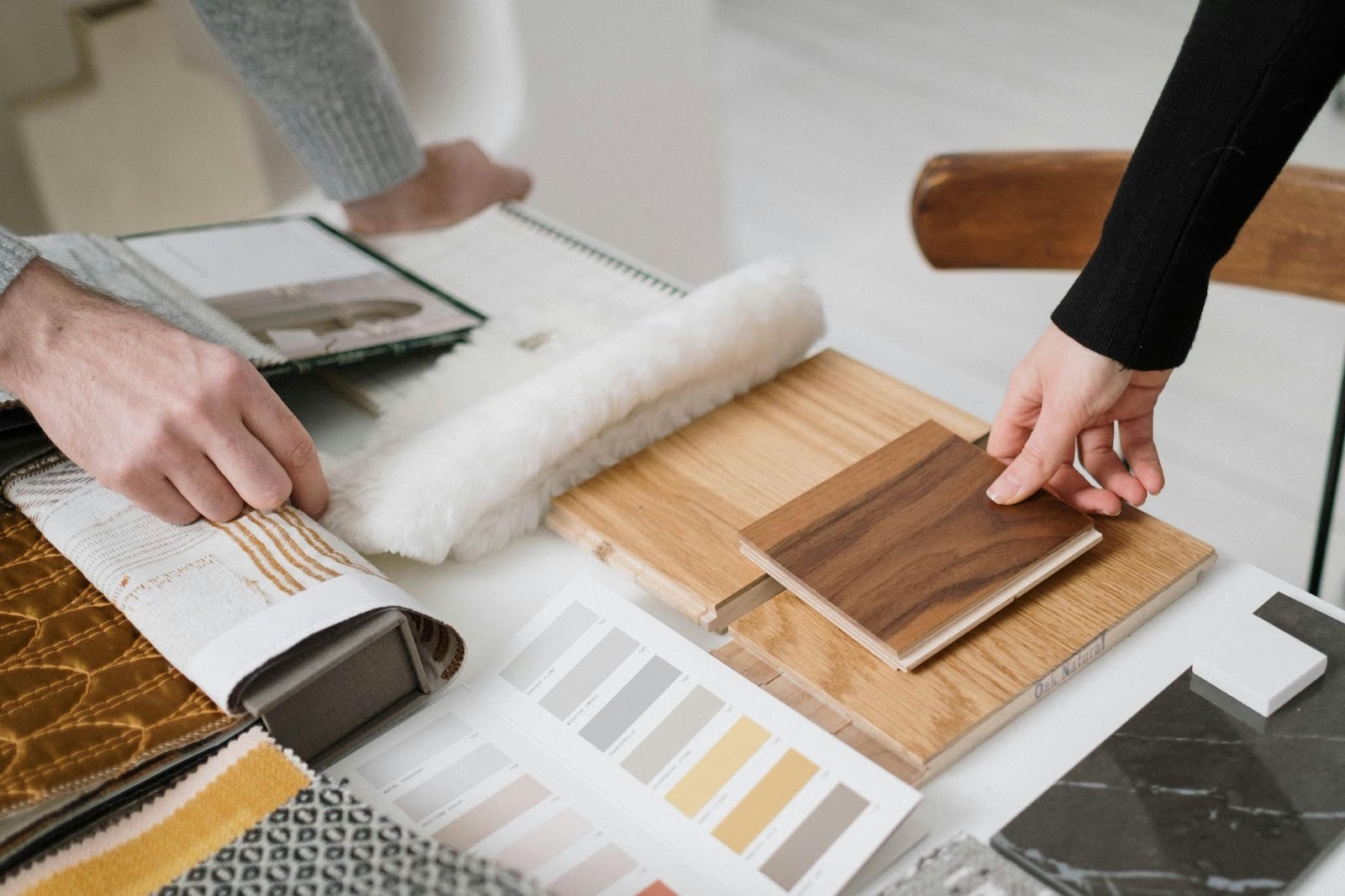
Because the kitchen shares a big room with other spaces, cabinet finishes should feel connected to the rest of the home.
That means thinking about how cabinetry relates to unexpected features in your home, like:
- Flooring
- Furniture in the living room
- Dining tables and chairs
- Build-in shelving or media units
Here are some examples of coordinating features to your advantage:
- Warm wood cabinets can complement hardwood floors and furniture.
- Light cabinets reflect natural light and keep the space bright.
- Matte finishes help reduce visual clutter.
When materials work together, the kitchen becomes part of the larger open space instead of feeling like a separate zone.
Two-Tone and Mixed Material Cabinets in Open Layouts
Two-tone cabinets have been a popular choice for open concept kitchens over the past few years.
Why? They add a flair of visual intrigue without getting in the way of the open layout.
A common styling we see everywhere is light perimeter cabinets with a darker island finish.
This approach defines different zones within the room while preserving a sense of harmony.
Mixing materials is another great way to achieve this effect.
For example, some kitchens combine:
- Painted cabinets
- Natural wood elements
- Stone countertops
- Metal accents
When done well, these combinations create a visually appealing kitchen that still feels connected to the surrounding living areas.
Storage Solutions That Keep Open Kitchens Clutter-Free
One challenge of an open concept layout is that the kitchen is always visible.
Dirty dishes, countertop clutter, and overflowing storage quickly become part of the entire room’s atmosphere.
That’s where smart storage solutions can save the day.
Some of the most helpful cabinetry features include:
- Deep drawers for pots and pans
- Built-in dividers for utensils
- Pull-out pantry shelves
- Hidden appliance garages
- Vertical storage for cutting boards
These solutions keep an open kitchen looking tidy and visually appealing.
Lighting and Cabinet Details That Enhance Visual Continuity
Lighting melds the kitchen into the rest of the room.
In an open concept kitchen, lighting should enhance both functionality and atmosphere.
Here are some common choices for achieving this:
- Pendant lights above kitchen islands
- Under-cabinet lighting for prep areas
- Subtle recessed lighting for the whole room
The smaller cabinet details are important too. Hardware, finishes, and lighting elements should complement nearby spaces.
What’s more, glass-front cabinets, soft lighting, and warm materials can make the kitchen feel more inviting and integrated with the living room.
Common Mistakes to Avoid With Open Concept Kitchen Cabinets
Even beautiful cabinets can create problems in open layouts if they’re not carefully planned.
Here are some of the most common mistakes.
- Overly bulky cabinetry. Large cabinet blocks can dominate the room and make the kitchen feel closed off.
- Too many finishes. Using too many materials can break the connection between the kitchen and the living areas.
- Poor placement of tall cabinets. Tall units placed near sightlines can interrupt the open feel of the space.
- Not enough storage. Without adequate storage, the kitchen can quickly feel cluttered, especially when everything is visible from the living room.
Avoiding these mistakes helps maintain the openness that makes open concept kitchens so dreamy.
Designing Open Concept Kitchen Cabinets That Balance Flow and Function
A successful open concept kitchen is, in large part, about thoughtful cabinet design.
Cabinet layout, storage features, finishes, and height choices all influence how the kitchen interacts with the rest of the home.
When planned well, cabinets help:
- Define the cooking zone
- Connect the kitchen to nearby living spaces
- Maintain a seamless flow across the floor plan
- Serve your daily cooking and storage needs
The outcome is a kitchen that feels practical, inviting, and visually connected to the entire home.
FAQs about Open Concept Kitchen Cabinets
What cabinet layout works best for an open-concept kitchen?
Layouts that keep tall cabinets on one wall and use kitchen islands to define the cooking zone usually work best.
Should open-concept kitchens have upper cabinets or open shelving?
Many kitchens combine both. Upper cabinets provide storage, while open shelving helps maintain an airy feel.
How do you match kitchen cabinets with living room furniture and finishes?
Choose cabinet finishes that complement nearby flooring, furniture, or built-ins so the kitchen blends naturally with surrounding living spaces.
Are two-tone cabinets a good choice for open floor plans?
Yes. Two-tone cabinets can help define the kitchen area while keeping the overall design cohesive.
How can you add storage without making an open kitchen feel closed off?
Use deep drawers, tall pantry cabinets, and island storage to add space while maintaining open sightlines.