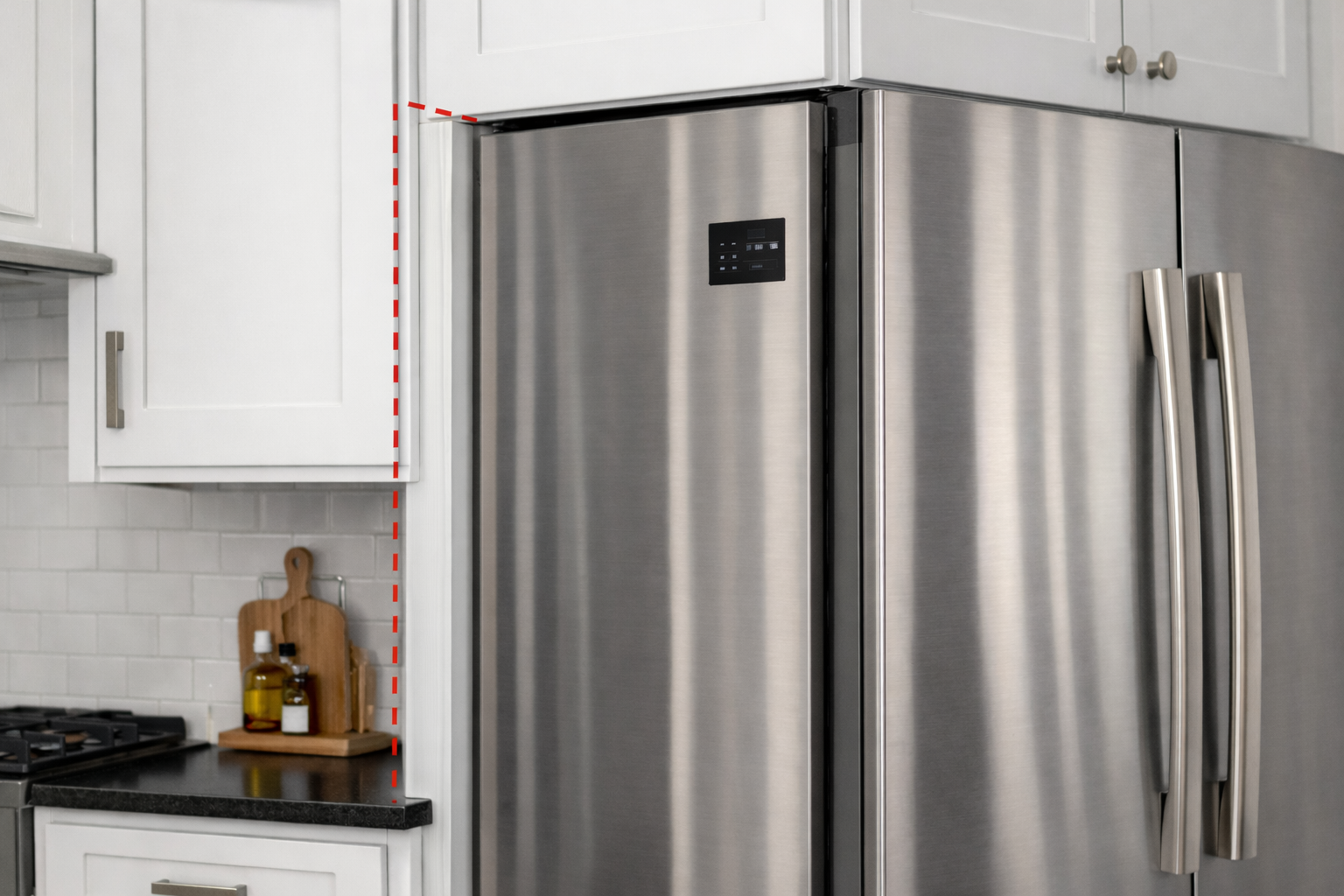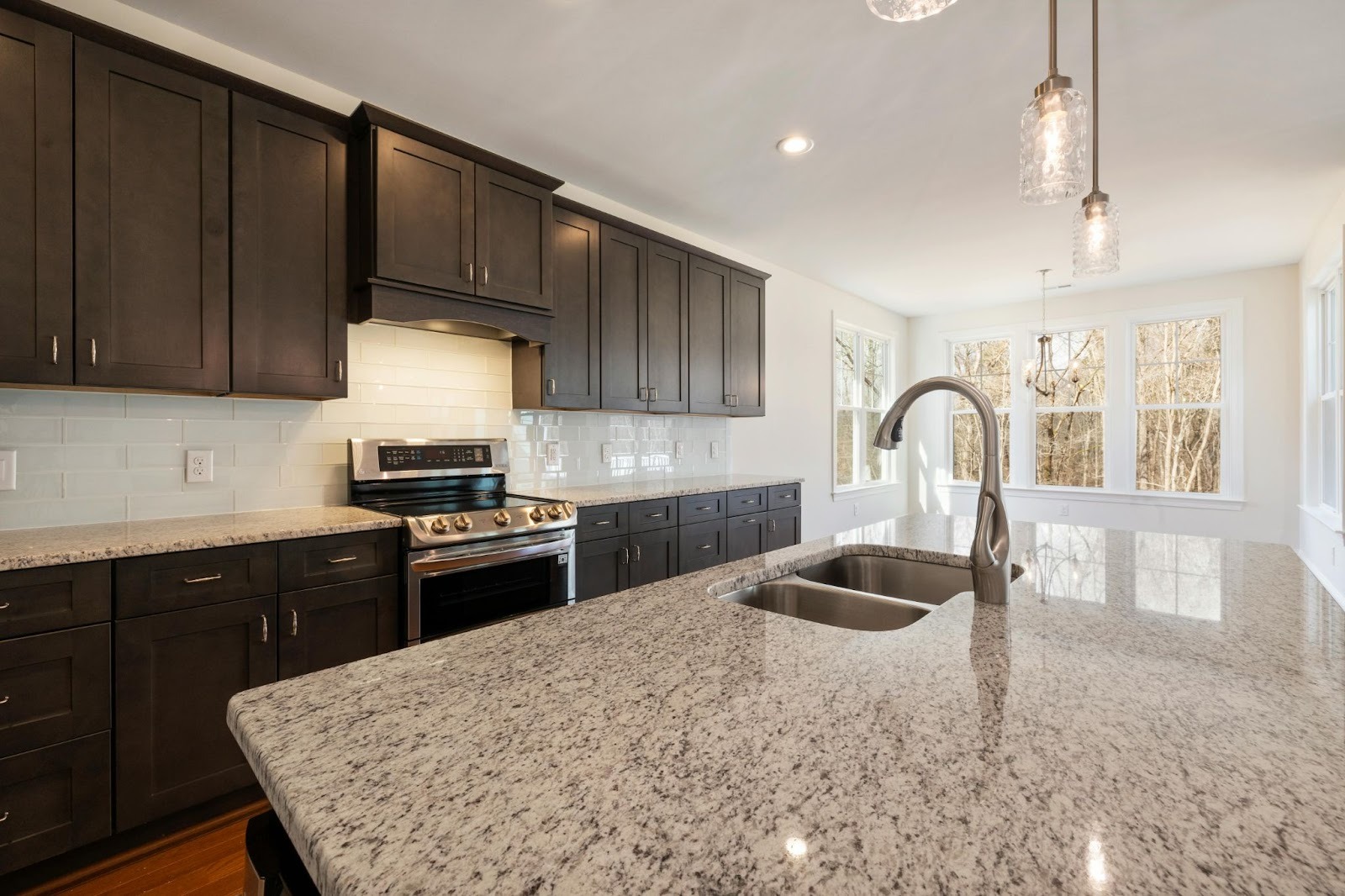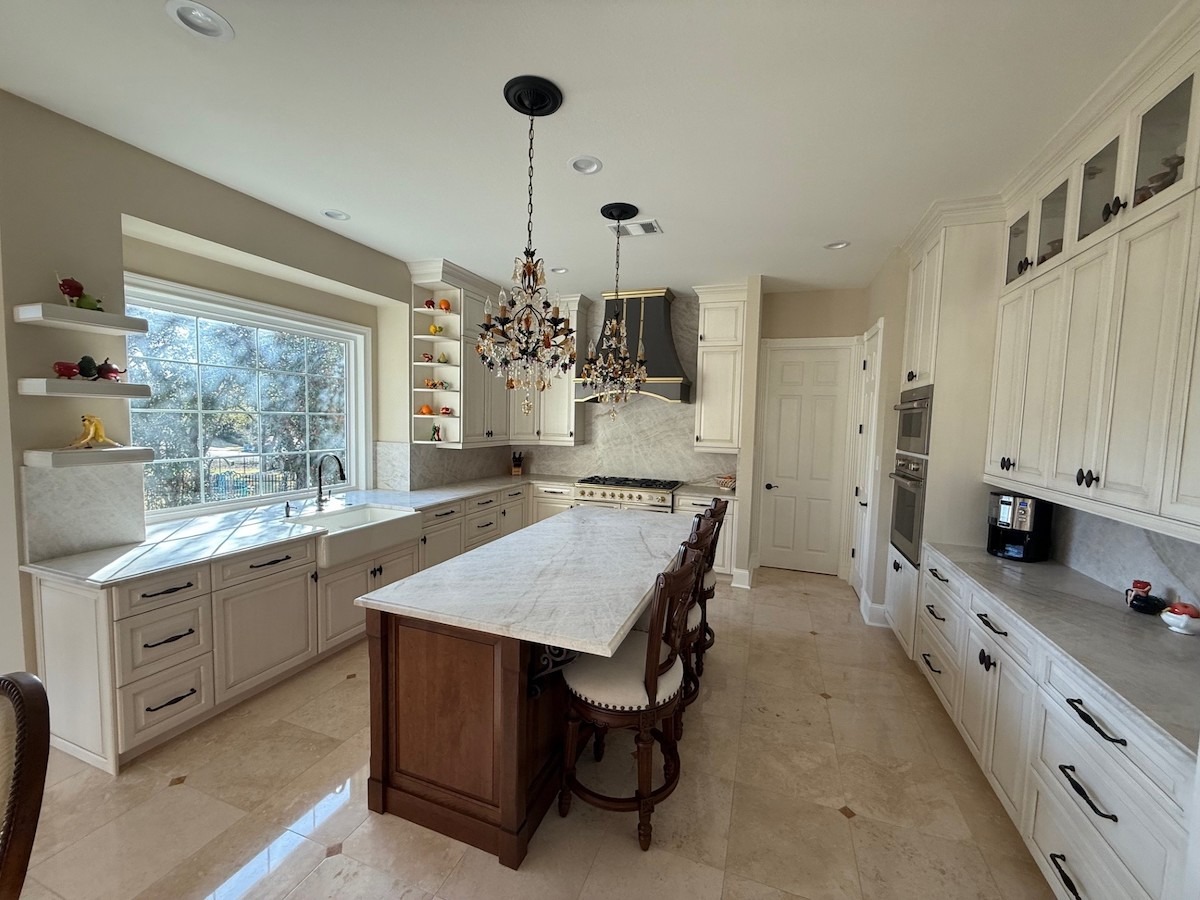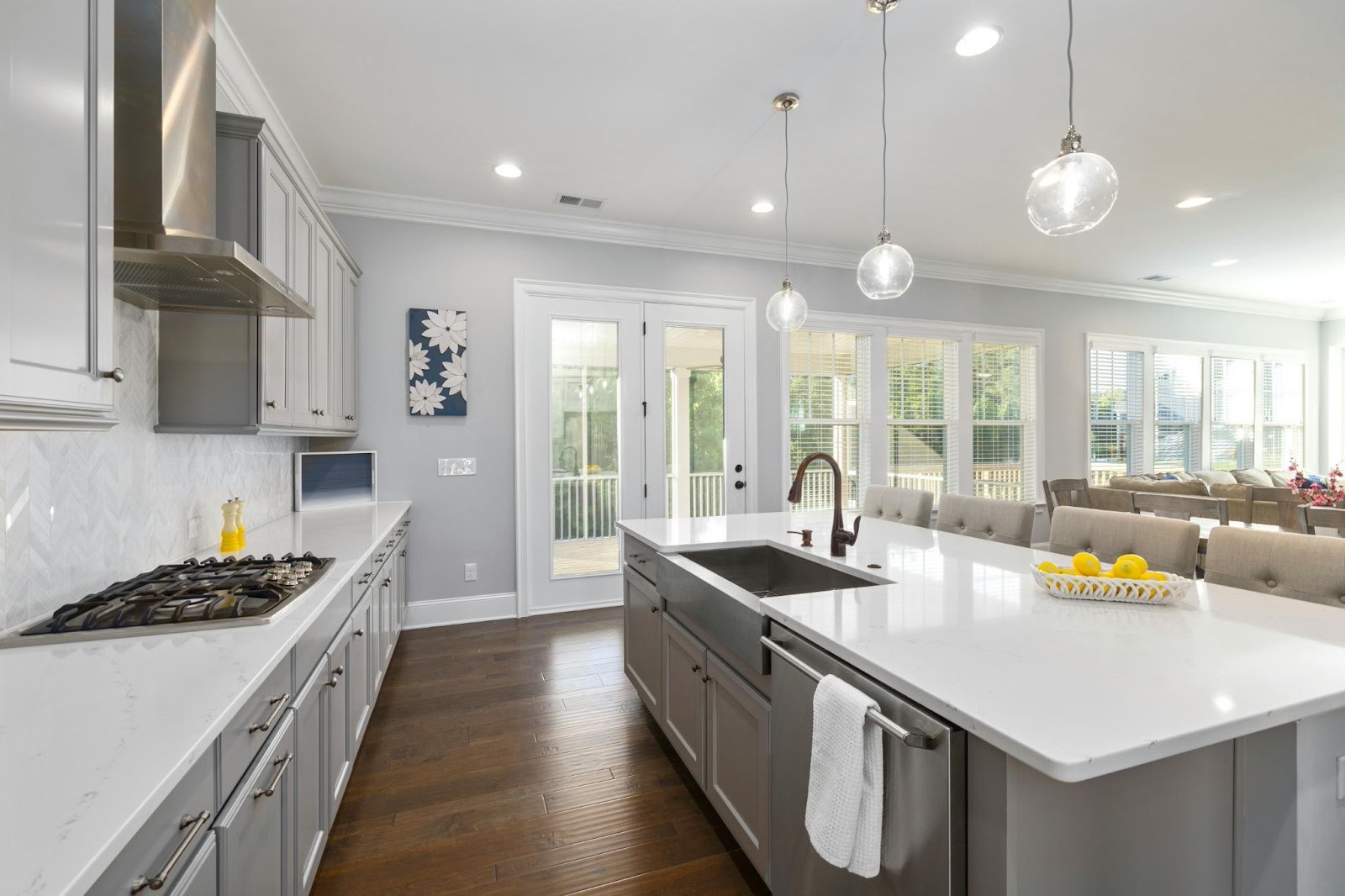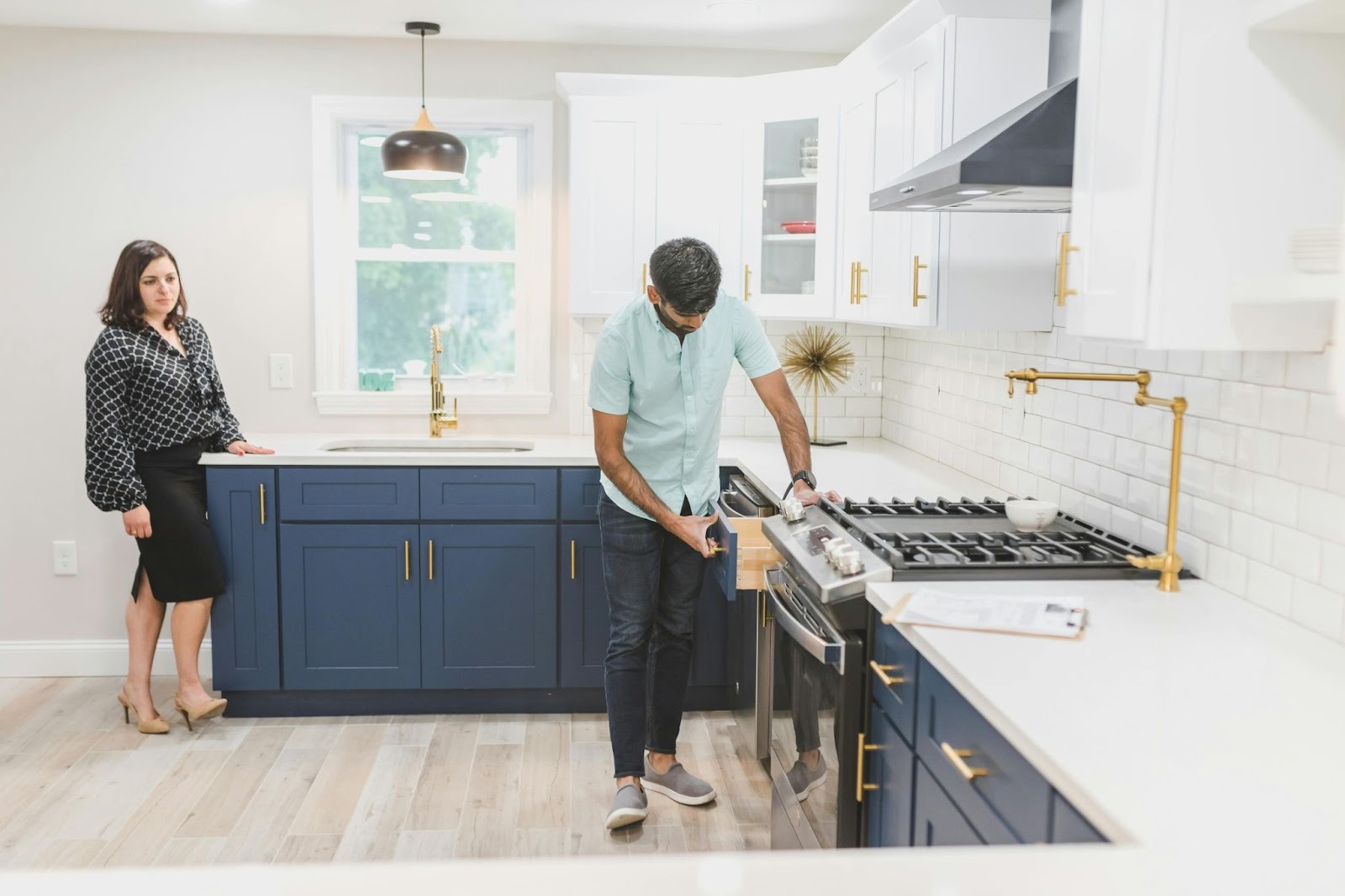
Kitchen design decisions often start with color, finishes, or layout. But an important choice is hiding in plain sight: base cabinet depth. The depth of your base cabinets affects how comfortable your kitchen feels, how much you can store, and how nicely everything works together. And choosing between standard and custom cabinet depth? That affects your entire kitchen experience.
Kitchen base cabinet depth refers to how far base cabinets extend from the wall, typically measured in inches. Standard base cabinets are usually 24 inches deep, which offers a nice balance of storage and accessibility. But homeowners can also use custom depths to tailor cabinets to their unique kitchen layout, storage needs, and preferences.
Here’s how to decide which option makes the most sense for your space.
Understanding Kitchen Base Cabinet Depth
Cabinet depth is the front-to-back measurement of the cabinet box, not including the countertop overhang.
Note that it’s different from cabinet height (vertical measurement) and width (side-to-side).
Kitchen base cabinet depth determines:
- How far you need to reach to access items
- Whether appliances and sinks fit properly
- How much usable storage space you gain
- How much walking space is in the kitchen
Depth matters just as much as cabinet height or width, especially in busy kitchens.
Standard Kitchen Base Cabinet Depth Explained
The standard base cabinet depth for most kitchens is 24 inches deep. This measurement is the industry norm because it works well with standard appliances, countertops, and kitchen layouts.
With a typical countertop overhang, the total depth usually ends up around 25–26 inches from the wall.
Why standard depth works for most kitchens:
- Readily available from most manufacturers
- Compatible with standard kitchen cabinet dimensions
- Easy installation and appliance alignment
- More affordable than custom options
- Works beautifully with wall cabinets installed above
Standard depth base cabinets strike the right balance between storage and accessibility.
Common Variations in Standard Depths
Even within “standard” sizing, there are a few variations worth considering.
- Sink base cabinets may have modified interiors to accommodate plumbing.
- Island cabinets can be deeper (sometimes 27–30 inches) to allow seating or more storage.
- Corner base cabinets often use specialized designs to make deeper spaces usable.
- Shallow base cabinets (18–21 inches) are sometimes used in tight spaces or secondary prep areas.
These standard adjustments help cabinets fit the kitchen layout without affecting flow.
Custom Kitchen Base Cabinet Depth Options
Custom cabinet depth means your cabinets are built specifically to your kitchen’s dimensions and needs rather than following standard dimensions.
With custom kitchen cabinets, you can:
- Create deeper cabinets for more storage
- Use shallower cabinets in narrow kitchens
- Fit oversized cookware or small appliances
- Adjust depth for taller residents or accessibility needs
- Align cabinetry with existing walls or architectural features
Custom depth is valuable in kitchens with unusual layouts, older homes, or specialized storage needs.
Comparing Standard vs Custom Base Cabinet Depth
Here’s how the two options compare.
Standard Base Cabinet Depth
- Typically 24 inches deep
- Lower cost
- Faster lead times
- Works with standard appliances
- Limited flexibility
Custom Base Cabinet Depth
- Tailored to your kitchen’s dimensions
- Greater design flexibility
- Better storage efficiency
- Higher cost due to labor and materials
- Ideal for unique layouts or luxury kitchens
If your kitchen is straightforward, standard depth usually works perfectly. If your space is tight, irregular, or highly personalized, custom depth can be worth the investment.
Factors to Consider When Choosing Cabinet Depth
Before deciding on the right cabinet depth, consider these practical factors:
- Kitchen space: Narrow walkways benefit from shallower cabinets.
- Appliances: Wall ovens, oven cabinets, and sinks require precise depth alignment.
- Storage requirements: Deeper cabinets support pull out shelves, racks, and drawer systems.
- Kitchen layout: Galley kitchens, L-shaped kitchens, and open layouts all operate differently.
- Adjacent cabinets: Keeping a consistent depth maintains visual harmony.
The right cabinet depth supports a functional and beautiful kitchen, not just one that looks good in photos.
Ergonomics and Accessibility Considerations
Cabinet depth can actually affect your posture and how you feel working in your kitchen every day.
Deeper cabinets offer more storage, but can be harder to reach.
Shallower cabinets help prevent strain, especially for:
- Shorter homeowners
- Aging homeowners
- Universal or ADA-friendly designs
For accessibility-focused kitchens, consider pairing shallower base cabinets with pull out shelves and drawer systems.
How Cabinet Depth Impacts Storage and Organization
Depth directly influences the efficiency of your kitchen’s storage.
- Deeper cabinets fit oversized cookware, pantry items, and offer specialized storage.
- Shallower cabinets encourage better organization.
- Drawers outperform shelves in deeper cabinets—less lost items!
- Vertical space can be better utilized with full height pantry cabinets or tall cabinets.
This is smart interior design at work, making your life easier.
Visual Balance and Design Harmony
Cabinet depth can make your life easier, but does it affect how your kitchen looks?
Proper depth alignment helps ensure that:
- Countertop proportions feel balanced
- Appliances sit flush with cabinets
- Upper cabinets don’t feel overpowering
- Kitchen islands blend in smoothly
A mismatched cabinet depth can disrupt flow, even if everything technically “fits.”
Cost Implications of Standard vs Custom Depths
Standard base cabinets are usually more affordable due to mass production and standard cabinet dimensions.
Custom cabinet depth increases cost because of:
- Custom fabrication
- Design time
- Specialized materials
- More complex installation
However, in kitchens where standard cabinets don’t fit well, custom depth can prevent costly layout issues later.
Expert Tips for Measuring Cabinet Depth Accurately
Before ordering cabinets take these steps:
- Measure from the wall to the furthest obstruction.
- Account for countertop dimensions and overhang.
- Check appliance specifications.
- Measure corners carefully.
- Confirm ceiling height and cabinet height compatibility.
🛠️ Pro Insight: Always measure multiple points along the wall. Older homes often have subtle inconsistencies that affect cabinet fit.
When to Choose Custom Cabinet Depth for Your Kitchen
Custom cabinet depth is often the better option when:
- Working with a small or narrow kitchen
- Designing around existing cabinetry
- Creating a luxury or designer kitchen
- Maximizing storage in limited space
- Accommodating unique appliances or sinks
In these cases, custom cabinets can transform usability and flow.
Ready to get started? iCabinetry works with you to get the best custom kitchen cabinets available, all tailored to fit your unique kitchen layout and design needs. Get started today.
FAQs about Kitchen Base Cabinet Depth
What is the most common kitchen base cabinet depth?
The most common kitchen base cabinet depth is 24 inches, not including countertop overhang.
How deep should my base cabinets be for optimal storage?
For most kitchens, 24 inches deep creates a good balance. Deeper cabinets work best with drawers or pull-out systems.
Can I adjust the depth of existing kitchen cabinets?
Not easily. Depth changes usually require cabinet replacement or custom modifications.
What’s the best cabinet depth for small kitchens?
Shallower cabinets (18–21 inches) can improve movement and comfort in small kitchens.
Is custom cabinet depth worth the extra cost?
Yes, especially when standard cabinets don’t fit your layout or storage needs. Custom depth is often worth it.