You don’t start thinking about your home’s resale value while you’re washing dishes. It happens when the cabinet doors aren’t closing properly anymore, when the countertops look dated, or when you visit a friend’s newly renovated kitchen and suddenly yours feels twenty years older than it did yesterday.
Whether you’re planning to sell next year or expect to stay for another decade, it’s natural to wonder if remodeling your kitchen is worth the investment.
A kitchen remodel can absolutely increase home value—but the return depends on how wisely you spend your budget. Buyers love kitchens that feel functional, attractive, and move-in ready. But that doesn’t necessarily mean installing the most expensive finishes available. Oftentimes, thoughtful upgrades to cabinets, storage, lighting, and layout offer a stronger return than luxury materials alone.
In this guide, you’ll learn which kitchen upgrades can add the most value, where homeowners often overspend, and how to make remodeling decisions that benefit your lifestyle and your home’s resale potential.
Does a Kitchen Remodel Increase Home Value?
For most homes, yes. The kitchen is still one of the first spaces buyers evaluate because it’s one of the most expensive rooms to renovate themselves. A kitchen that looks clean, organized, and functional makes a stronger impression than one with worn cabinets, outdated appliances, or limited storage.
That said, there’s no guaranteed return on investment.
The value added by a kitchen remodel depends on multiple factors, such as:
- The current condition of your kitchen
- The quality of the renovation
- Your neighborhood and local housing market
- The materials you choose
- Whether the upgrades fit the rest of the home
Rather than spending more money for the sake of it, focus on creating a kitchen that feels like a genuine improvement to future buyers.
How Much Value Can a Kitchen Remodel Add?
There’s no guaranteed dollar amount or percentage from a kitchen remodel, because every home’s value, neighborhood, and renovation are different. But national remodeling data gives homeowners a general benchmark for what they can expect.
According to the 2025 Cost vs. Value Report by Zonda, the average minor kitchen remodel costs $28,458 and recoups an average of 112.9% of that investment at resale. This adds approximately $32,141 in resale value.
The report ranked a minor kitchen remodel as the fifth-highest ROI home improvement project nationwide, and the only interior remodeling project to make the top five. That shows it has a real payoff.
But that doesn’t mean every kitchen remodel will offer the same exact return. The added value will depend on factors like your local housing market, the condition of your existing kitchen, the quality of the work, and whether your improvements match buyer expectations for your neighborhood.
So if you’re committed to a remodel, ask yourself, “Which improvements will buyers notice first?” Those are usually the upgrades worth prioritizing.
Budget Matters More Than Most Homeowners Realize
A successful remodel comes down to spending your budget where it makes the biggest impact.
Contractors know this secret: premium stone countertops and luxury appliances don’t always dramatically increase resale value. In reality, buyers often respond more to a kitchen that feels cohesive and functional.
If you’re remodeling primarily for resale, focus first on improvements that affect how buyers experience the room every day, like a better flowing layout or more cabinet storage.
🛠️ Pro Insight: Buyers notice outdated cabinets long before they notice premium countertops. Cabinetry visually dominates the room, making it one of the smartest features to invest.
Minor Kitchen Remodel ROI
If your main goal is to increase resale value, a minor kitchen remodel may deliver the strongest return. It’s all about focusing on the upgrades buyers notice first, while keeping project costs reasonable.
Instead of tearing the kitchen down to the studs, a minor remodel includes updates like:
- New cabinet doors or cabinet replacement
- Updated hardware
- Fresh paint
- Improved lighting
- New countertops
- Modern, energy-efficient appliances
These improvements can completely change how the kitchen functions while keeping the existing layout intact.
Since the project is more budget-conscious, homeowners can likely recover a higher percentage of their investment when it’s time to sell.
Major Kitchen Remodel ROI
A major kitchen remodel is a much larger investment. It may involve:
- Changing the layout
- Installing new cabinetry
- Replacing flooring
- Updating plumbing and electrical systems
- Adding new countertops
- Purchasing a full suite of appliances.
These projects can completely transform how a kitchen looks, functions, and feels and are often worth the investment for homeowners planning to stay in their home for many years.
However, a larger project doesn’t always produce a higher percentage return at resale. While buyers certainly appreciate a beautifully renovated kitchen, they’re not always willing to pay significantly more just because the finishes are more luxurious.
Why Expensive Kitchen Finishes Don’t Always Mean Higher Returns
One of the biggest remodeling myths is that spending more automatically adds more value.
In reality, buyers are usually looking for kitchens that feel clean, functional, cohesive, and move-in ready. An expensive imported countertop won’t necessarily outweigh outdated cabinets, poor lighting, or an awkward layout.
Instead of choosing the most expensive finish in every category, invest where buyers will notice the biggest difference.
🛠️ Pro Insight: A balanced kitchen almost always outperforms a flashy one. Choose materials that fit your home’s style, neighborhood, and price point instead of trying to create a luxury kitchen in a mid-range market.
Which Kitchen Upgrades Add the Most Value?
The improvements that typically add the most value are the ones buyers immediately notice and continue appreciating every day.
Prioritize upgrades that improve both appearance and functionality before spending money on purely decorative features.
1. Cabinets
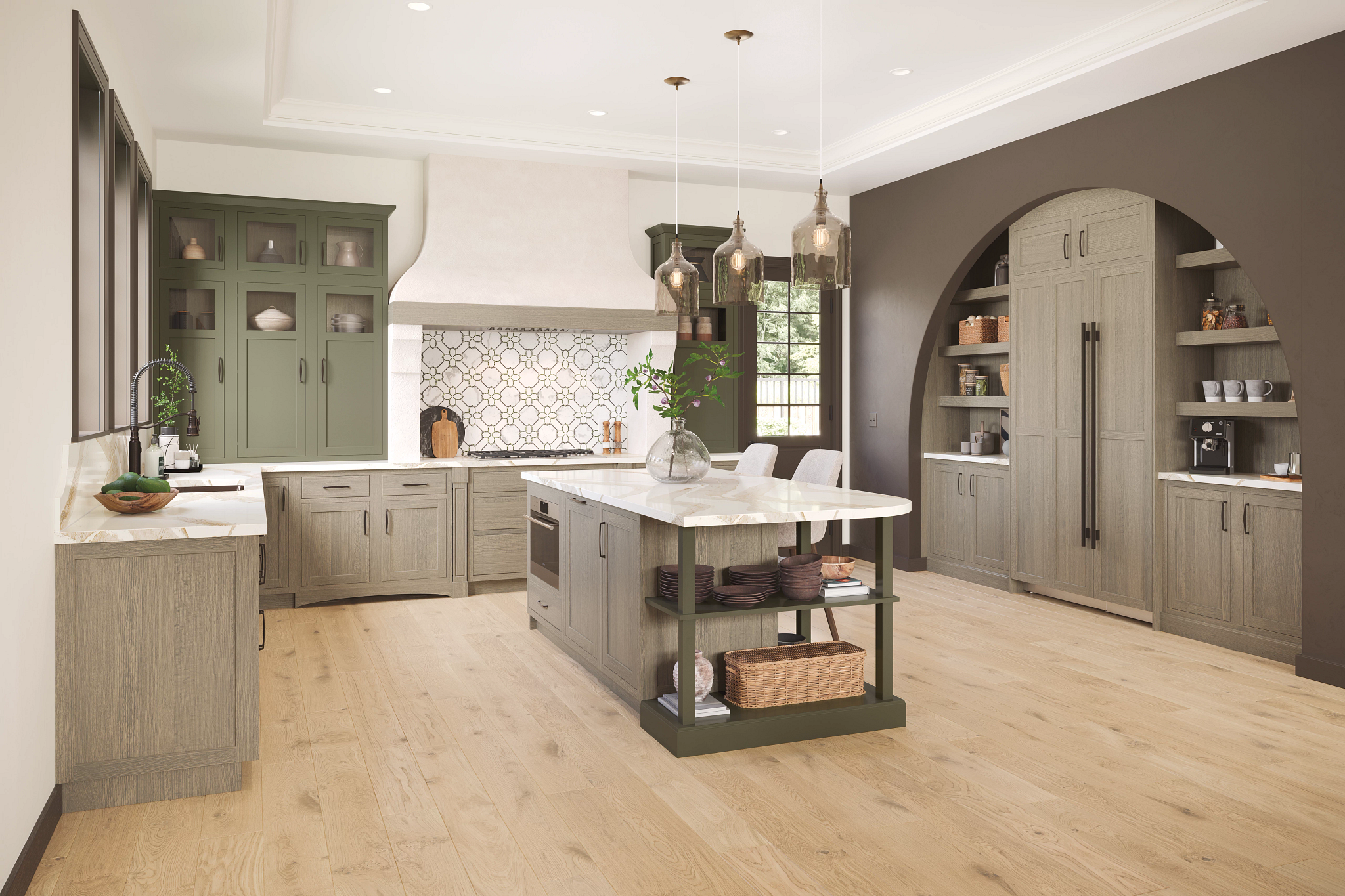
Cabinets occupy more visual space than any other feature in the kitchen. And buyers notice them immediately.
Worn finishes, damaged doors, outdated styles, or lack of storage can make an otherwise well-maintained kitchen feel older than it is. On the other hand, quality cabinetry instantly makes the entire room feel cleaner, brighter, and more livable.
Today’s home buyers also value storage just as much as appearance. Deep drawers, soft-close hardware, pantry organization, and thoughtful layouts all create a kitchen that makes your life feel easier.
If you’re comparing cabinet styles before your remodel, our guide to inset cabinets vs. overlay cabinets explains the differences in cost, appearance, and construction.
When you’re ready to explore cabinet options, browse iCabinetry’s full collection of cabinet lines to compare styles, finishes, and levels of customization.
2. Countertops
Countertops influence the overall look of the kitchen, but they don’t have to be the most expensive material available to leave a good impression.
Quartz continues to be one of the most popular choices because it’s durable and low maintenance.
Granite, butcher block, laminate, and quality tile can also create beautiful kitchens when paired with complementary cabinetry and finishes.
Look for the most balanced countertop design for your budget, not simply whichever is the most luxurious.
3. Sink and Faucet
Not many features are used as often as the kitchen sink and faucet.
Buyers appreciate fixtures that look attractive and stand up to frequent use. That’s why stainless steel sinks are a practical favorite—they’re durable and easy to maintain. And farmhouse sinks bring timeless character for homeowners who don’t mind a little extra upkeep.
The best choice is going to be the one that complements the overall kitchen design, not just the latest trend.
4. Backsplash
A backsplash is one of the most cost-effective ways to make a kitchen feel whole.
Simple subway tile, natural stone, or neutral ceramic tile can tie together cabinets, countertops, and wall colors without overwhelming the room.
If your home’s style supports it, a bolder backsplash can become a focal point with personality. But timeless designs generally have broader resale appeal.
5. Appliances
Don’t let outdated appliances make your otherwise updated kitchen feel unfinished.
Modern, energy-efficient appliances will help buyers picture themselves moving in right away.
You don’t necessarily have to purchase professional-grade appliances for this update. In many neighborhoods, a coordinated suite of quality mid-range appliances offers better value than luxury brands that go beyond buyer expectations.
6. Flooring
Kitchen flooring needs to be strong enough to handle moisture, spills, pets, and heavy foot traffic.
Tile, luxury vinyl plank, and engineered hardwood are popular choices because they balance that durability with attractive design. Neutral flooring also ages more gracefully than highly patterned or trend-driven styles.
7. Lighting
Surprisingly, lighting has an enormous influence on how buyers perceive a kitchen.
A layered approach to lighting usually creates the best results. Combine overhead lighting with task lighting and under-cabinet lighting to make the room feel brighter, larger, and more welcoming.
🛠️ Pro Insight: Under-cabinet lighting is truly one of the simplest upgrades that makes cabinetry look custom.
If you’re exploring ways to modernize your kitchen, our guide to popular kitchen cabinet trends also covers lighting, finishes, and design details shaping today’s kitchens.
Balancing Resale Value With Personal Enjoyment
If you’re planning to stay in your home for years, resale value shouldn’t be the only factor guiding your decisions.
A kitchen should also support the way you cook, gather, and live. Better storage, improved workflow, quality cabinetry, and finishes you genuinely love can add value that’s difficult to measure in dollars alone.
The sweet spot is creating a kitchen you’ll still love years from now while choosing timeless features that will also appeal to future buyers.
Should You Remodel Before Selling?
If you expect to sell within the next year or two, focus on practical improvements rather than a full luxury renovation.
Fresh cabinet finishes, updated hardware, improved lighting, modern appliances, and a fresh coat of paint can dramatically improve buyer perception without stretching your budget.
If you’re unsure which updates matter most in your local market, consider speaking with a trusted real estate professional before beginning your remodel.
How iCabinetry Direct Can Help
Cabinets set the tone for the entire kitchen, making them one of the smartest places to invest during a remodel.
Whether you’re looking for semi-custom cabinetry, fully custom options, or timeless inset designs, iCabinetry Direct offers cabinet collections for a wide range of styles, budgets, and remodeling goals.
Explore real customer kitchens for inspiration, compare cabinet collections, or request a free quote to start planning your project.
Browse real customer kitchens ↗
FAQs about Kitchen Remodeling and Property Value
It depends on the scope of the remodel, your local housing market, and the quality of the work. According to Zonda’s 2025 Cost vs. Value Report, the average minor kitchen remodel recouped 112.9% of its cost at resale.
Not always. The greatest returns typically come from thoughtful, buyer-friendly improvements that fit the neighborhood and home’s overall value.
Often, yes. Minor remodels usually deliver a higher percentage return because they focus on high-impact updates without dramatically increasing project costs.
Cabinets, lighting, modern appliances, durable countertops, quality flooring, and improved storage tend to have the greatest impact on buyer perception.
High-quality cabinets can significantly improve both the appearance and functionality of a kitchen, making the space more attractive to prospective buyers.
Neutral, timeless finishes generally appeal to the widest range of buyers while allowing future homeowners to personalize the space more easily.
Absolutely. If you plan to stay in your home, a remodel can improve daily comfort, organization, and enjoyment while still supporting long-term resale value.