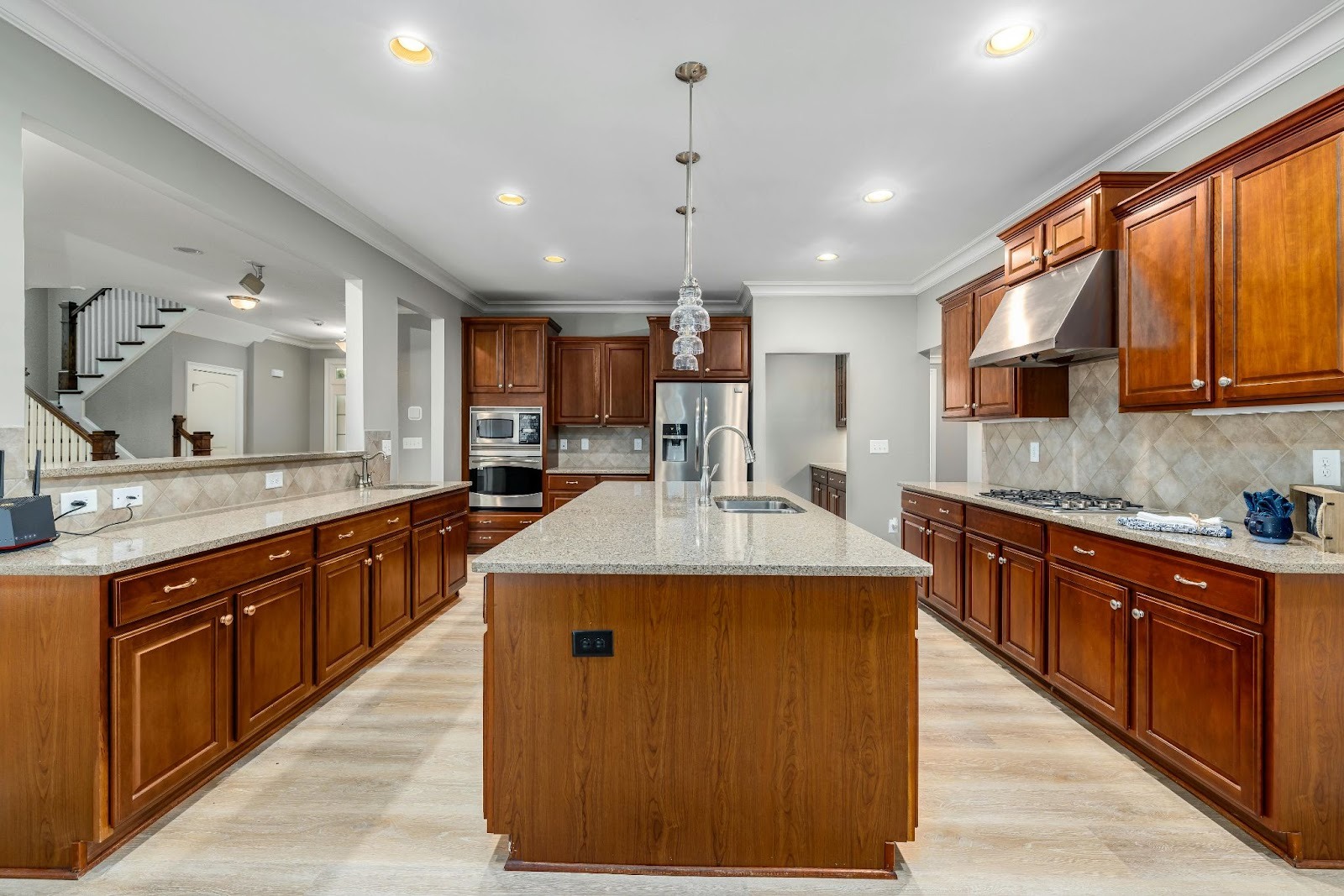
Cherry kitchen cabinets tend to spark strong reactions. Some people immediately fall in love with their warmth and richness. Others might feel worried they’ll look too dark, too traditional, or too “early 2000s.” If you’re stuck between admiration and uncertainty, this article is for you.
Cherry kitchen cabinets are worth it if you want a durable hardwood with rich character, a long lifespan, and timeless warmth. But they work best when complemented by modern design choices. Their value depends on budget, lighting, layout, and whether you are ready to embrace cherry’s natural aging rather than fight it.
This guide breaks down the real pros, the honest drawbacks, what cherry cabinets cost, and how to design with them so they feel current.
What Are Cherry Kitchen Cabinets?
Cherry kitchen cabinets are made from American black cherry hardwood, a premium wood known for its fine grain, smooth texture, and deep reddish-brown tones.
When freshly milled, cherry often appears lighter and slightly pink, but it darkens naturally over time with light and air exposure.
This aging process is one of cherry’s defining traits. Unlike painted cabinets or lighter woods that try to stay consistent, cherry changes. The color deepens, warms, and develops character with use. It’s a similar process to leather or solid wood furniture.
Cherry is associated with craftsmanship and traditional cabinetry, but the wood itself isn’t inherently old-fashioned. How it looks depends entirely on design choices.
The Pros of Cherry Kitchen Cabinets
Cherry cabinets are still a favorite for good reason. When used with intentional design in mind, they offer several benefits:
- Strong, durable hardwood: Cherry is a true hardwood, making it well-suited for daily kitchen use. Cabinet doors, drawers, and frames hold up well, even in busy households.
- Smooth, refined grain: Cherry has a tight, even grain that looks polished without being busy. It complements countertops and backsplashes instead of stealing attention from them.
- Ages beautifully over time: One of cherry’s biggest advantages is how it matures. As the wood darkens, the color becomes richer and more cohesive. Many homeowners feel their kitchen looks better five or ten years in than it did on day one.
- Natural warmth and depth: Cherry brings a certain warmth that paint and synthetic finishes struggle to replicate. It adds a richness that makes kitchens feel lived-in.
🛠️ Pro Insight: Cherry is one of the few cabinet materials that actually gains visual value over time. Planning to stay in your home long-term? This matters more than trends.
The Cons of Cherry Kitchen Cabinets
Cherry isn’t for everyone, and that’s okay. Understanding the tradeoffs helps you decide with clarity rather than regret.
- Color changes over time: Cherry naturally darkens as it’s exposed to light and air. You might have noticed this in the pros list, because some homeowners love this aging effect. But it can be noticeable, especially early on, and cabinets behind appliances or inside pantries may age at a slightly different pace.
- Can feel heavy in low-light kitchens: In small or dim spaces, cherry cabinetry can visually overwhelm the room if it’s not balanced with light countertops, backsplashes, or good lighting.
- Higher cost than many alternatives: Cherry typically costs more than maple, alder, or MDF-based cabinets. While it’s not the most expensive hardwood, it’s not considered a budget option.
- Traditional look requires thoughtful design: Cherry’s long association with traditional kitchens means that poor pairings like ornate door styles and dark countertops can make it feel stuck in the past.
How Much Do Cherry Kitchen Cabinets Cost?
Cherry kitchen cabinets generally sit in the mid-to-high price range, depending on construction and customization.
- Stock or RTA cherry cabinets: Often limited in selection and finish quality, but lower upfront cost.
- Semi-custom cherry cabinets: Most common choice, offering better construction and design flexibility.
- Custom cherry cabinets: Highest cost, best fit, and full control over finishes and sizing.
Compared to other woods:
- Cherry is often less expensive than walnut
- More expensive than maple or birch
- Similar or slightly higher price than white oak, depending on finish and grade
Cost drivers include door style, construction method, and which cabinet supplier you choose.
Cherry Cabinets vs Other Popular Wood Cabinets
If you’re weighing cherry against other materials, here’s how it stacks up.
Cherry vs Walnut
Walnut cabinetry offers dramatic contrast and darker tones upfront, while cherry warms and deepens gradually. Walnut feels bolder; cherry feels softer and more traditional.
Cherry vs White Oak
White oak cabinetry is lighter and more contemporary. Cherry is warmer and richer. Oak reflects light for a bright space, and cherry absorbs it for a cozier, glowing atmosphere.
Cherry vs Maple
Maple is more uniform and predictable. Cherry has more personality and grain variation. Maple suits painted finishes better; cherry shines when left natural.
Modern Design Tips to Make Cherry Cabinets Feel Current
This is where cherry either succeeds or fails.
To keep cherry cabinets modern instead of dated, focus on balance in your kitchen design.
Here are some surefire ways to keep cherry looking modern:
- Use simpler door styles, like flat-panel or clean shaker designs. Avoid heavy detailing or ornate profiles that amplify cherry’s traditional reputation.
- Pair cherry with light countertops, like quartz, marble-look surfaces, or pale stone. These visually brighten the space. Dark granite on cherry is where many kitchens go wrong.
- Modern hardware makes a huge difference. Think brushed brass, matte black, or minimal pulls instead of decorative knobs.
Cherry also works beautifully as a contrast feature. Use it on lower cabinets or islands, and pair it with painted or lighter upper cabinets for a fresh style.
🛠️ Pro Insight: Cherry cabinets feel most modern when they’re not trying to carry the entire kitchen visually. Let them accent the space, not dominate it.
Best Kitchen Styles for Cherry Cabinets
Cherry cabinets tend to shine in certain design styles.
They work especially well in transitional kitchens, where warmth and clean lines meet. They’re also a great fit for modern traditional spaces that value longevity over trendy designs.
Homes with good natural light can support cherry more easily, as sunlight brings out the wood’s depth without making the space feel dark.
Cherry can also work in minimalist kitchens, but all the other design elements need to stay restrained.
Are Cherry Kitchen Cabinets a Good Choice for Small Kitchens?
They can be, but careful planning is important here.
In small kitchens, cherry should be balanced with:
- Light countertops and backsplashes
- Plenty of task lighting
- Simple layouts with clean lines
Using cherry selectively, like on an island or lower cabinets, usually works better than an all-over application in tight spaces.
Maintenance and Long-Term Care of Cherry Cabinets
Cherry cabinets are relatively low-maintenance, but they do benefit from mindful care.
- Cleaning
Use a soft cloth with mild soap and water for routine cleaning. Avoid abrasive sponges, harsh chemicals, or ammonia-based products. These can damage the finish.
- Color change over time
Cherry naturally darkens as it’s exposed to light and air. This is expected and part of the wood’s appeal. The color will become richer and more even over time.
- Preventing uneven aging
During the first year or two, occasionally move items like small appliances or rugs so light exposure stays consistent. Any early contrast typically evens out as the cabinets continue to age.
- Surface protection
Avoid dragging heavy or sharp objects across cabinet faces, and consider soft-close hardware to reduce wear on doors and drawers.
Cherry is a living material, and its gradual transformation is part of what makes it a long-term, rewarding choice.
Where to Buy Cherry Kitchen Cabinets Online
Not all cherry cabinets are created equal, especially when shopping online. Knowing what to look for helps ensure you’re getting real value, not just the appearance of it.
When browsing options, pay attention to:
- Wood quality: Look for solid cherry or high-quality cherry veneer over plywood construction. Avoid products where cherry is only used as a thin surface layer over particle board.
- Finish options: A good supplier will offer clear finishes, light stains, and protective topcoats designed to enhance cherry’s grain while allowing natural aging.
- Construction standards: Dovetail drawers, solid frames, and durable joinery matter more than surface appearance alone.
- Reviews and customization: Real customer photos, detailed specs, and flexible sizing options are strong indicators of quality.
Many homeowners choose to buy kitchen cabinets online because it offers broader selection, clearer pricing, and easier comparison, especially for premium woods like cherry that aren’t always well-represented in showrooms.
FAQs About Cherry Kitchen Cabinets
Are cherry kitchen cabinets outdated?
No. Cherry only feels dated when paired with ornate doors, dark countertops, or old hardware. With modern design features, it looks timeless.
Do cherry cabinets darken over time?
Yes. Cherry naturally darkens with light exposure, developing a deeper, richer tone over time.
Are cherry cabinets more expensive than other woods?
They usually cost more than maple or alder, but less than walnut. Cherry sits in the mid-to-high price range.
Do cherry cabinets work in modern kitchens?
Yes, when balanced with light surfaces, simple doors, and modern hardware.
Are cherry kitchen cabinets worth it?
Yes, if you want durable hardwood with warmth that improves as it ages.