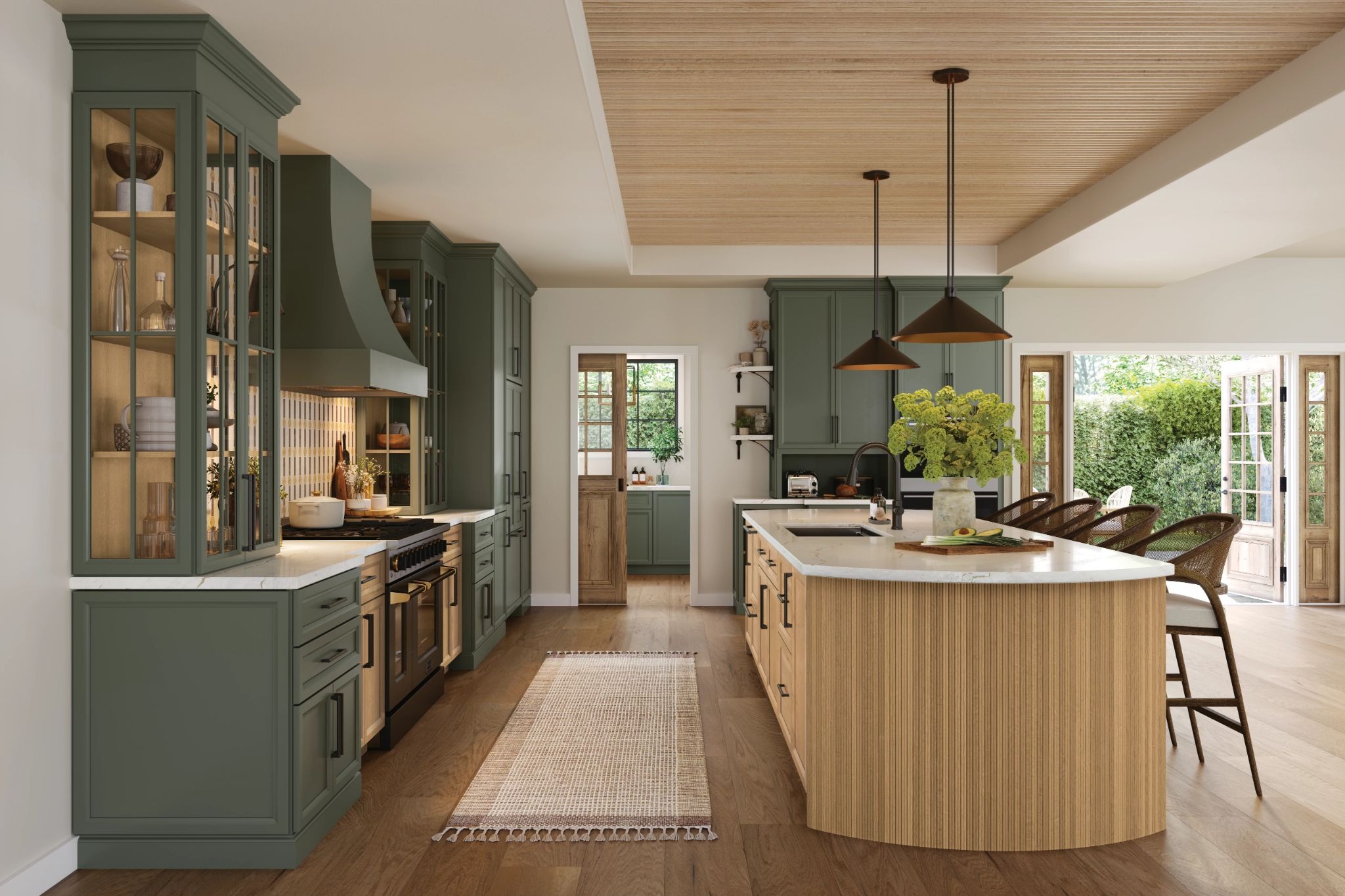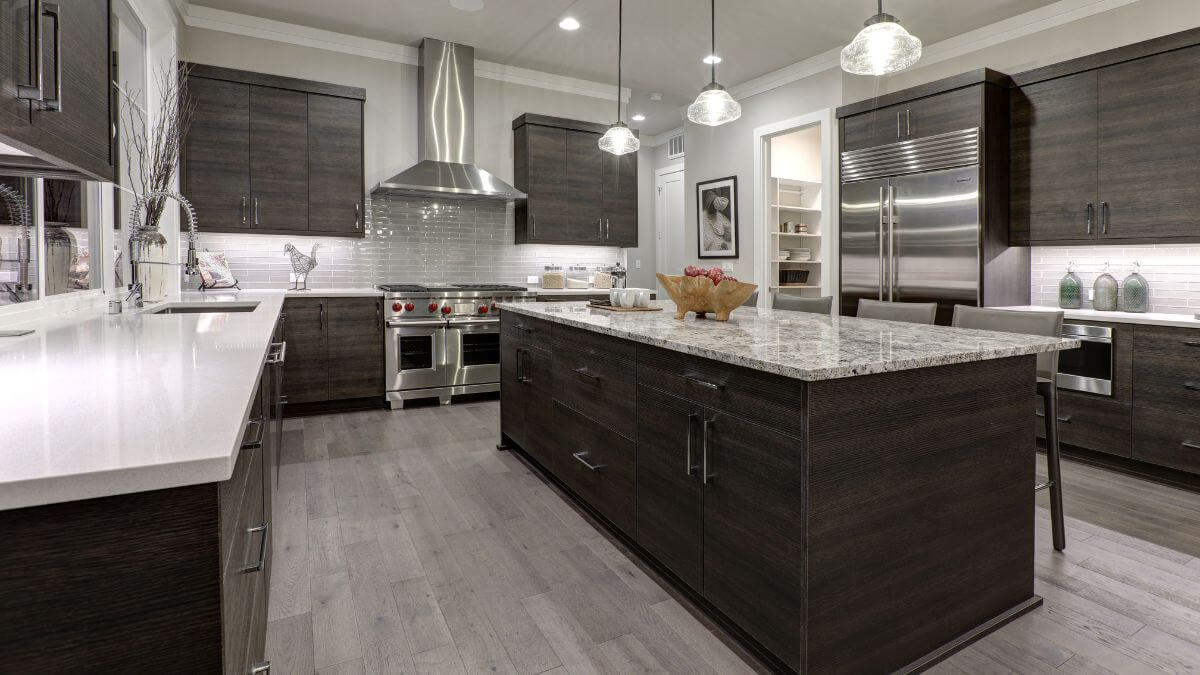
You’ve probably seen them in photos of your dream kitchen: cabinets that go all the way to the ceiling with no awkward spaces above. That means no dust-catching gap and no fake plants. Just clean lines and a finished look.
Ceiling height cabinets have become one of the most popular upgrades in modern kitchen design because they use every inch of vertical space. On top of that, they make the kitchen feel more custom and intentional.
Ceiling height kitchen cabinets extend all the way to the ceiling instead of stopping short like standard wall cabinets. This approach maximizes vertical storage, removes awkward gaps above cabinets, and creates a built-in look that many homeowners love in both modern kitchens and traditional kitchen styles.
In this guide, we’ll explore when ceiling height cabinets make sense, the storage benefits they offer, and design ideas that help full-height cabinetry feel balanced.
What Are Ceiling-Height Kitchen Cabinets?
Ceiling height cabinets are exactly what they sound like: cabinets that extend all the way to the ceiling instead of leaving empty space above.
In many kitchens, standard wall cabinets stop 12–18 inches below the ceiling. That leaves a blank space that often becomes a decorative display space, or just an empty space where dust collects.
With floor to ceiling cabinets or full height cabinetry, that gap disappears.
There are a few ways designers achieve this look:
- Taller cabinet boxes that reach the ceiling
- Stacked cabinets with a smaller upper section
- Cabinets paired with crown molding that visually connects them to the ceiling
This approach works in both modern kitchen design and more traditional spaces. Shaker style doors, glass inserts, and decorative trim can all be used while still bringing cabinetry all the way to the ceiling.
Why Ceiling-Height Kitchen Cabinets Are Trending
The popularity of cabinets that go to the ceiling has grown for several reasons.
- Homeowners are prioritizing storage more than ever. Kitchens now store everything from cookware to small appliances, so maximizing vertical storage space has become important.
- Full height cabinetry creates a seamless appearance that many people associate with custom cabinetry. Instead of awkward gaps above cabinets, you get a continuous wall of cabinetry that feels built in.
- They work well in homes with tall ceilings or high ceilings, where standard height cabinetry can look undersized.
In short, they offer:
- More storage
- Cleaner visual lines
- A more finished look
These three benefits explain why so many homeowners and contractors are opting for floor to ceiling cabinets for a kitchen remodel.
Storage Benefits of Ceiling-Height Kitchen Cabinets
One of the most significant advantages of ceiling height cabinets is storage.
When cabinets extend upward, they unlock additional storage space that would otherwise be wasted.
That extra vertical space is perfect for items you don’t use every day, such as:
- Holiday dishes
- Seasonal cookware
- Large serving platters
- Specialty appliances
These top shelves create extra storage space without having to expand the kitchen’s footprint.
And in compact kitchens or smaller homes, that added storage makes all the difference.
Instead of leaving empty space above the cabinets, the kitchen gains maximum storage capacity without affecting how tidy it looks.
Visual Impact: How Full-Height Cabinets Change a Kitchen
Ceiling height cabinets change how the kitchen feels.
When cabinetry runs all the way to the ceiling, the eye naturally travels upward, which helps the room feel taller.
Without gaps above cabinets to hold random objects or decorative items, there’s also less visual clutter. The cabinetry forms one continuous design element across the kitchen wall.
This is even more helpful in open layouts where the kitchen connects to nearby living spaces.
Instead of multiple broken lines, full height cabinets create a strong architectural look that anchors the room.
As a bonus, with ceiling-high cabinets there’s one less surface to clean and dust.
When Ceiling-Height Cabinets Make the Most Sense
Ceiling height cabinets tend to shine in these kitchen layouts:
- Small space kitchens that need more storage
- Homes with high ceilings where standard cabinets look short
- Open concept layouts where cabinetry acts as a visual anchor
- Kitchens with limited wall space
In these cases, extending cabinets upward helps maximize storage while balancing out the visual design.
Homeowners planning a kitchen remodel often choose ceiling height cabinets if they want a kitchen that feels custom, not builder-grade.
When Ceiling-Height Cabinets May Not Be the Best Choice
That said, ceiling height cabinets aren’t perfect for every kitchen.
In some cases, they might even create challenges.
For example:
- Low ceilings can make tall cabinets feel overwhelming
- Tight budgets may not allow for custom cabinetry
- Some homeowners prefer decorative display space above cabinets
- Certain kitchen styles benefit from open shelving
And in kitchens with uneven ceilings, bringing cabinets flush to the top may also require extra trim or adjustments.
That’s why full height cabinetry requires careful consideration of function and design preferences.
Standard Ceiling Heights and Cabinet Planning
Ceiling height is an essential measurement when planning cabinet sizes.
Here’s how cabinet height typically works with common ceiling heights.
- 8-foot ceilings: Most kitchens with 8-foot ceilings use stacked cabinets or crown molding to bridge the gap.
- 9-foot ceilings: These allow taller cabinet boxes or two tiers of cabinetry for a balanced design.
- Tall ceilings (10+ feet): In kitchens with tall ceilings, designers often combine floor to ceiling cabinets with decorative trim or architectural details.
Some luxury kitchens even include features like a rolling library ladder to access upper storage.
When deciding on cabinet sizes, it’s crucial to understand your ceiling height so that the cabinets feel proportional to your kitchen layout.
Design Ideas for Ceiling-Height Kitchen Cabinets
Full-height cabinetry doesn’t have to feel heavy. With the right design choices, ceiling height cabinets can look clean, intentional, and beautifully integrated into the kitchen.
Here are a few approaches designers often use.
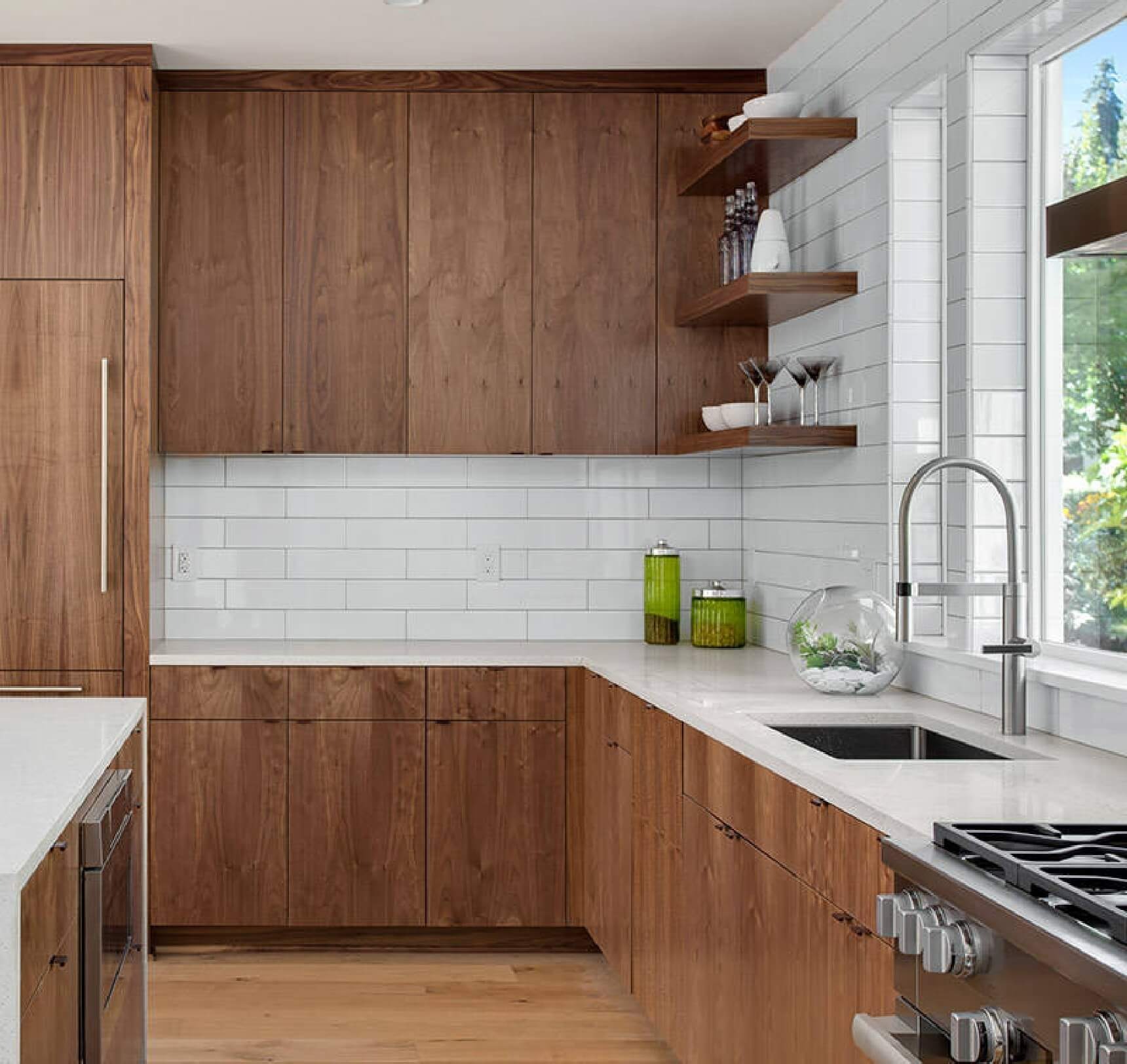
Sleek Modern Floor-to-Ceiling Cabinetry
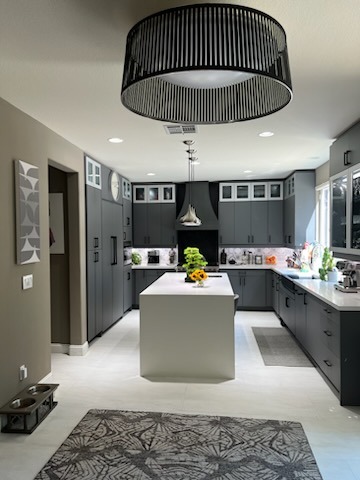
In a modern kitchen, floor-to-ceiling cabinets often feature:
- Flat cabinet doors
- Hidden or minimal hardware
- Integrated appliances
- Clean vertical lines
The cabinetry blends into the wall, creating a calm, architectural look. Projects like Gabrielle’s Modern California Kitchen, shown above, demonstrate how floor-to-ceiling cabinets can make a kitchen feel streamlined and uncluttered.
If you like this style, explore more ideas in our guide to modern minimalist kitchen cabinets.
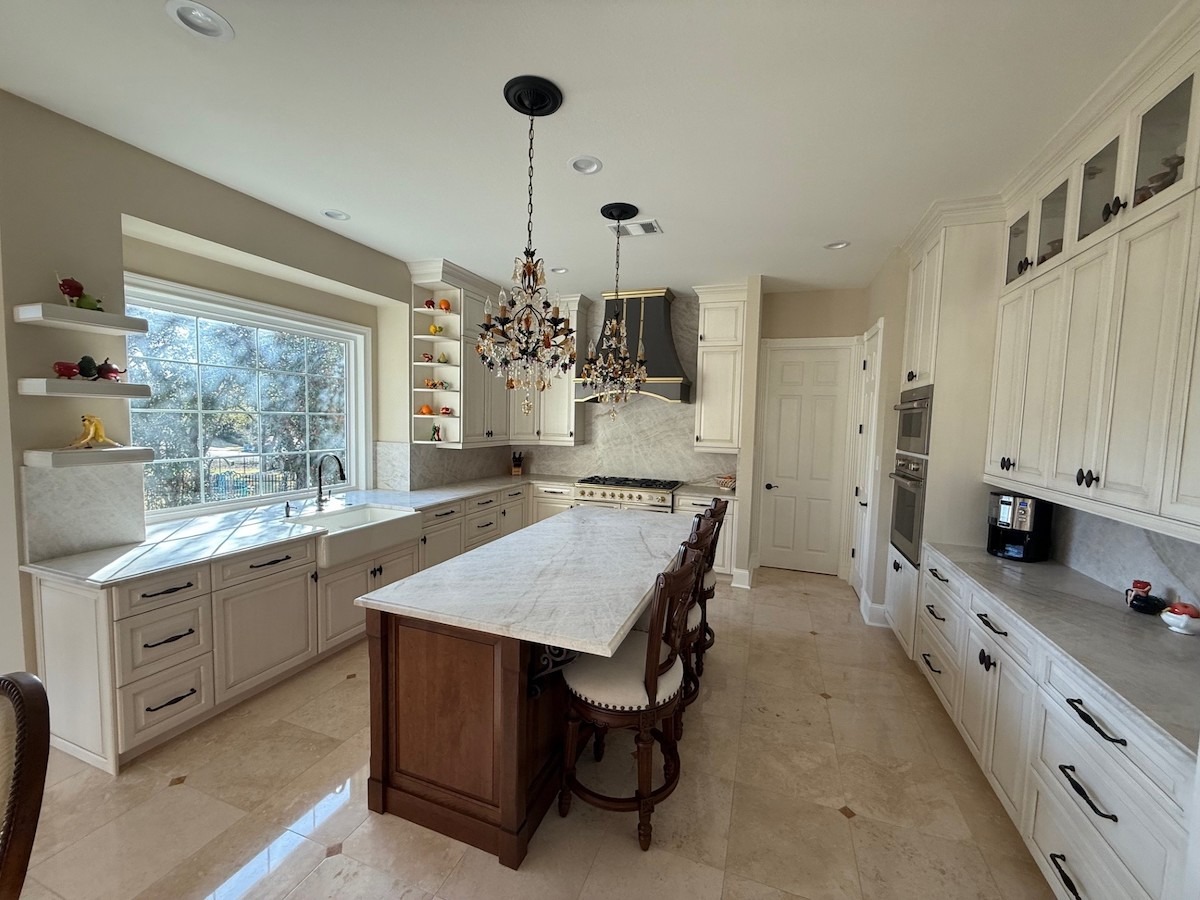
Traditional Kitchens with Crown-Extended Cabinets
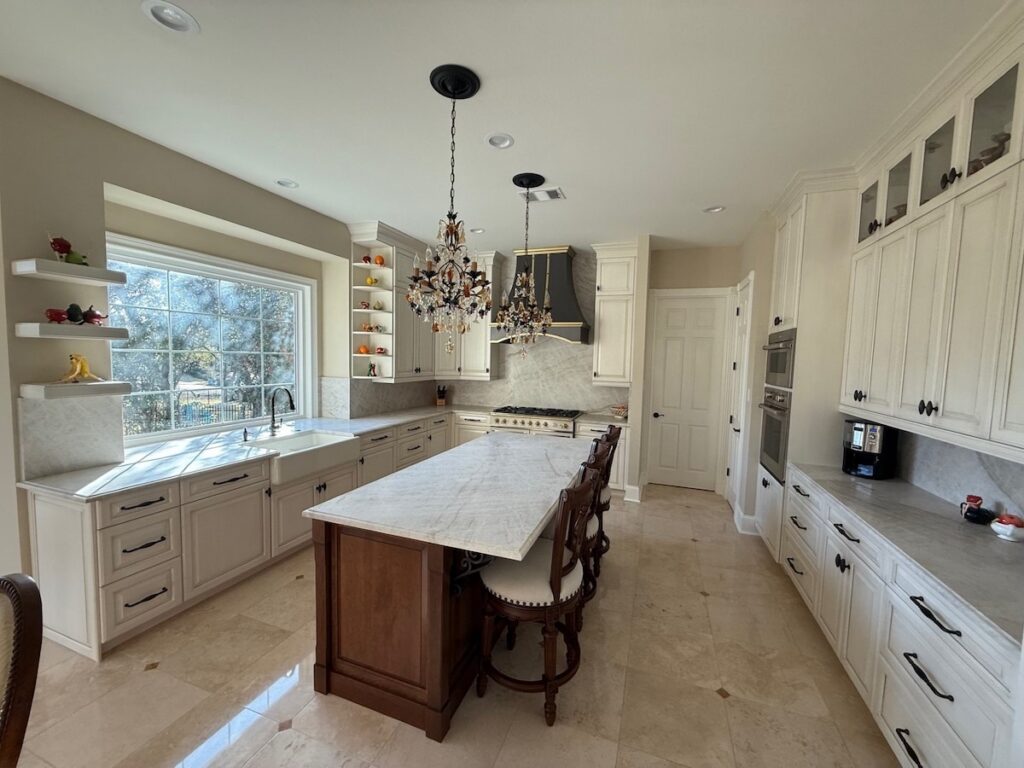
Traditional kitchens often achieve ceiling height cabinets using stacked uppers and crown molding.
A smaller upper cabinet tier extends the cabinetry to the ceiling while maintaining classic proportions. This approach works especially well with shaker style doors or inset cabinetry, as seen in projects like Debbie’s Traditional Austin TX Kitchen, shown above.
For a deeper look at how trim completes the design, see our guide to crown molding for kitchen cabinets.
Two-Tone Ceiling-Height Cabinet Designs
Another way to soften floor-to-ceiling cabinets is with two-tone finishes.
Common combinations include:
- Dark base cabinets with lighter upper cabinets
- Painted cabinets with warm wood accents
- Neutral cabinetry paired with a wood island
This adds visual interest while keeping tall cabinetry from feeling overwhelming. If you like this look, explore our guide to two-tone kitchen cabinet ideas for more inspiration.
Choosing the Right Materials and Finishes
Material choices strongly influence how tall cabinets feel in a room.
Lighter finishes help reflect natural light and maintain an open space feeling.
Popular options include:
- Painted white cabinetry
- Light wood finishes
- Soft neutral tones
Darker cabinets can still work beautifully, especially when paired with contrasting countertops or glass front upper cabinets.
Adding glass inserts or glass front upper cabinets can also break up large cabinet walls and create subtle display space.
Lighting Considerations for Tall Cabinets
Lighting is a crucial element to think about when cabinets reach the ceiling.
Without good lighting, the upper sections of tall cabinets can appear dark.
Helpful lighting solutions include:
- Under-cabinet lighting for task areas
- Recessed ceiling lighting
- Pendant lighting over islands
Lighting also highlights architectural details like crown molding and helps cabinetry feel more integrated into the kitchen design.
Cost Considerations and Budget Planning
Ceiling height cabinets usually cost more than standard cabinets.
The added cost comes from:
- Larger cabinet sizes
- More materials
- Higher installation complexity
- Additional trim and crown molding
However, many contractors, designers, and homeowners feel the long-term benefits outweigh the extra expense.
The combination of more storage, improved aesthetics, and a custom appearance can significantly elevate a kitchen.
Maintenance and Cleaning Tips for Tall Cabinets
Tall cabinets are surprisingly easy to maintain.
Because they eliminate the gap above cabinets, there’s less dust buildup overall.
For occasional cleaning of top shelves, most homeowners simply use a small step stool.
Choosing easy-clean finishes and durable materials also helps keep cabinetry looking fresh over time.
Designing Ceiling-Height Cabinets That Feel Balanced
The best ceiling height cabinets balance ample storage with visual harmony.
Successful designs incorporate these features:
- Proportion between cabinet sizes and ceiling height
- Finish choices that complement the space
- Lighting that highlights cabinetry rather than hiding it
When planned carefully, ceiling height cabinets create a kitchen that feels organized, functional, and complete.
If you’re designing your dream kitchen, bringing cabinets all the way to the ceiling is one of the most impactful decisions you can make.
FAQs about Ceiling Height Kitchen Cabinets
Are ceiling-height kitchen cabinets worth it for storage?
Yes. They provide extra storage space by using vertical space that would otherwise be wasted.
How do you access the top shelves of ceiling-height cabinets?
Most homeowners use a small step stool. In kitchens with very tall ceilings, a rolling library ladder can provide easier access.
Do ceiling-height cabinets make a kitchen look bigger?
Often, yes. They draw the eye upward and remove awkward gaps above cabinets.
Are ceiling-height cabinets more expensive than standard cabinets?
Typically, yes. Taller cabinet sizes and additional materials increase costs.
Should all cabinets go to the ceiling or just some sections?
Many kitchens extend only certain sections, like tall pantry cabinets or perimeter cabinets, while leaving other areas more open.
What ceiling height works best for full-height kitchen cabinets?
Ceiling heights of 9 feet or more usually provide the most flexibility for floor-to-ceiling cabinetry.