Designing kitchen cabinets around a window is one of those details that can subtly make or break a kitchen. Done well, it creates balance, light, and flow. Done poorly, it can feel awkward, cramped, or unfinished. But luckily with the right planning, windows can become one of your kitchen’s strongest design features.
Designing kitchen cabinets around a window is about balancing natural light, storage, and style. The right layout preserves sunlight, keeps cabinetry functional, and turns the window into a natural focal point rather than a design obstacle.
Here’s what to consider when planning your design.
Why Windows Matter in Kitchen Cabinet Design
Windows bring in light, yes, but they can also set the atmosphere of a kitchen. Imagine morning sun over the sink, and afternoon light across the counters. That connection to the outdoors makes kitchens feel more open, welcoming, and alive.
From a design standpoint, windows influence:
- Where upper cabinets can (and can’t) go
- How symmetrical the layout feels
- How bright or shadowed work zones become
- Whether the kitchen feels spacious or boxed in
Ignoring the window and designing cabinets around it as an afterthought can easily lead to awkward gaps, blocked light, or wasted space. Treat the window as a design anchor and you’ll create a kitchen that feels well-composed.
Understanding the Challenges of Designing Cabinets Around Windows
Designing cabinetry around a window isn’t always straightforward. Some common challenges include:
- Limited wall space for upper cabinets
- Uneven symmetry, especially when windows aren’t centered
- Reduced storage compared to a full wall of cabinets
- Height differences between windows, ceilings, and cabinet lines
Windows don’t follow cabinet rules, and that’s where thoughtful design comes in. The goal isn’t to force symmetry at all costs, but to create visual balance while keeping the kitchen practical.
Optimal Layouts for Kitchen Cabinets Around a Window
Different kitchen layouts handle windows differently. Here’s how to make each one work.
L-Shaped Kitchens
In L-shaped layouts, windows often sit on one wall, naturally breaking up upper cabinetry. This works beautifully when you:
- Keep cabinets on one wall
- Let the window wall breathe with fewer uppers
- Use open shelving or shorter cabinets near the window
U-Shaped Kitchens
U-shaped kitchens benefit from symmetry, but windows can interrupt that flow. Here’s a common solution:
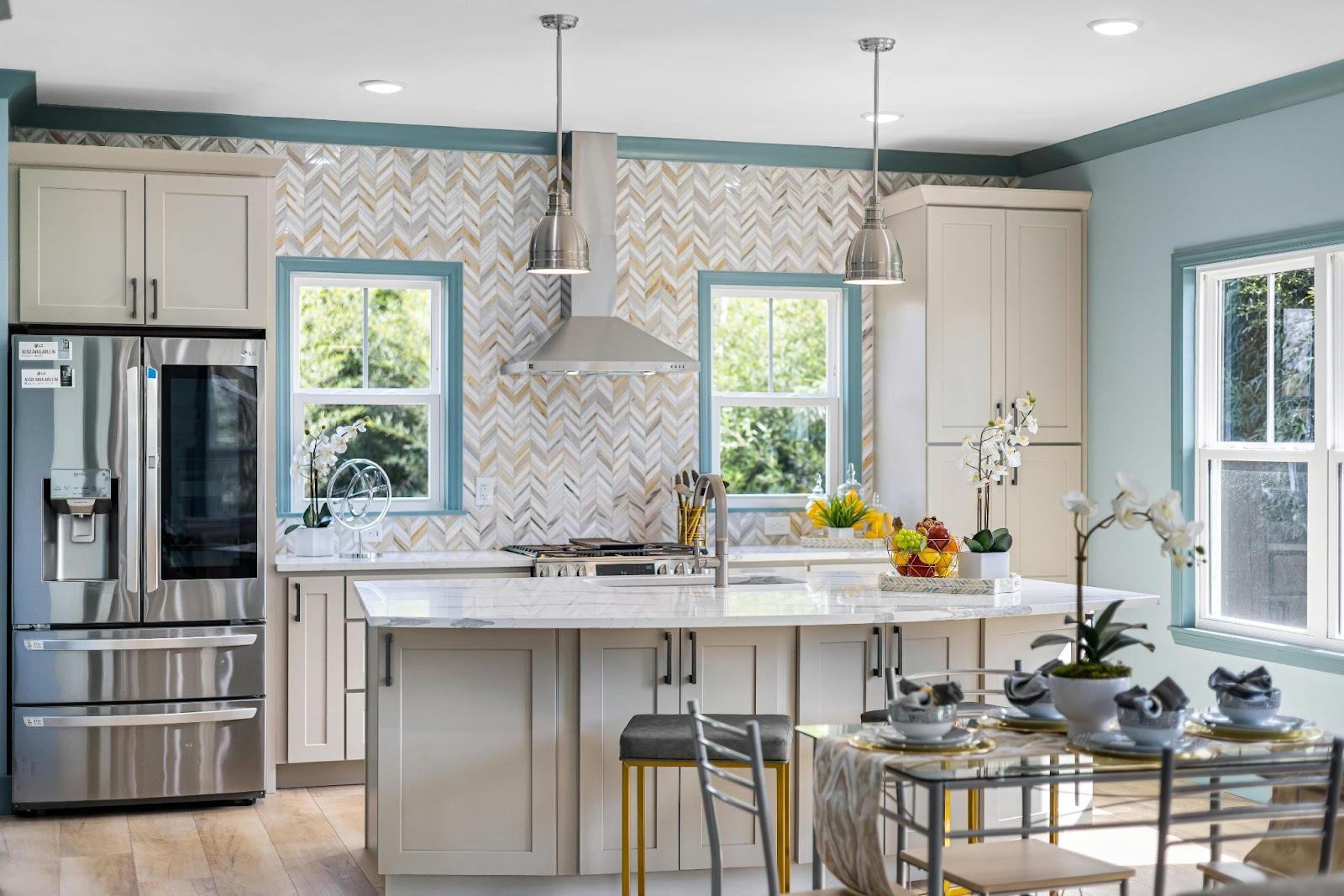
- Center the sink under the window
- Use matching cabinets on either side
- Stop uppers at equal heights to maintain balance
Galley Kitchens
In galley kitchens, windows are valuable for preventing a closed-in feel. Pro designers often:
- Skip upper cabinets on the window wall
- Use lower cabinets only
- Add reflective backsplashes to amplify light
🛠️ Pro Insight: Symmetry doesn’t necessarily mean identical cabinets. Equal visual weight through shelving, trim, or spacing is important, too.
Balancing Natural Light and Storage Space
This is the heart of designing kitchen cabinets around a window: keeping the light without sacrificing function.
Try these smart strategies for a perfect balance:
- Shorter upper cabinets that stop below the window header
- Glass-front cabinets to preserve light flow
- Open shelving near or around the window
- No uppers at all on the window wall
Lower cabinets do the heavy lifting for storage, while the window wall becomes lighter and more open. This balance makes kitchens feel larger, even if storage is technically reduced.
Creative Design Ideas for Cabinets Around a Window
Windows open the door to creative cabinetry details that wouldn’t work on a solid wall.
Consider these standout ideas:
- Floating shelves flanking the window for dishes or decor
- Window-height countertops that run into the sill for a seamless look
- Corner cabinets that soften transitions near the window
- Extended trim or molding to visually connect cabinets across the window
These details help the window feel integrated, not like a cutout interrupting your cabinetry plan.
Choosing the Right Materials and Finishes
Windows bring light, and sometimes moisture. Materials matter here.
These are the best options for window-adjacent cabinets:
- Painted wood for classic warmth and durability
- Moisture-resistant MDF for consistency and stability
- Laminate finishes for easy cleaning and reflection
Lighter finishes, like soft whites, pale woods, and warm neutrals, help bounce light deeper into the kitchen. This makes window areas feel expansive rather than fragmented.
Integrating Lighting for a Brighter, Functional Kitchen
Natural light changes throughout the day. Layered lighting keeps the kitchen functional at any hour.
Consider:
- Under-cabinet LED lighting for task zones
- Pendant lights above a sink centered on a window
- Reflective backsplashes to amplify daylight
- Warm lighting temperatures that complement sunlight
🛠️ Pro Insight: Avoid placing strong downlights directly in front of windows. They create glare and flatten the natural light effect.
Common Mistakes To Avoid When Designing Around Windows
A few mistakes can undermine an otherwise great kitchen cabinet design:
- Blocking windows with tall cabinets.
✓ Solution: Stop uppers early or switch to shelving. - Forcing symmetry where it doesn’t exist.
✓ Solution: Balance visually, not mathematically. - Leaving awkward gaps above windows.
✓ Solution: Use trim, shallow cabinets, or extend molding to the ceiling. - Ignoring how the window aligns with cabinet heights.
✓ Solution: Plan cabinet elevations after confirming window dimensions.
Bringing It All Together With Custom Cabinetry
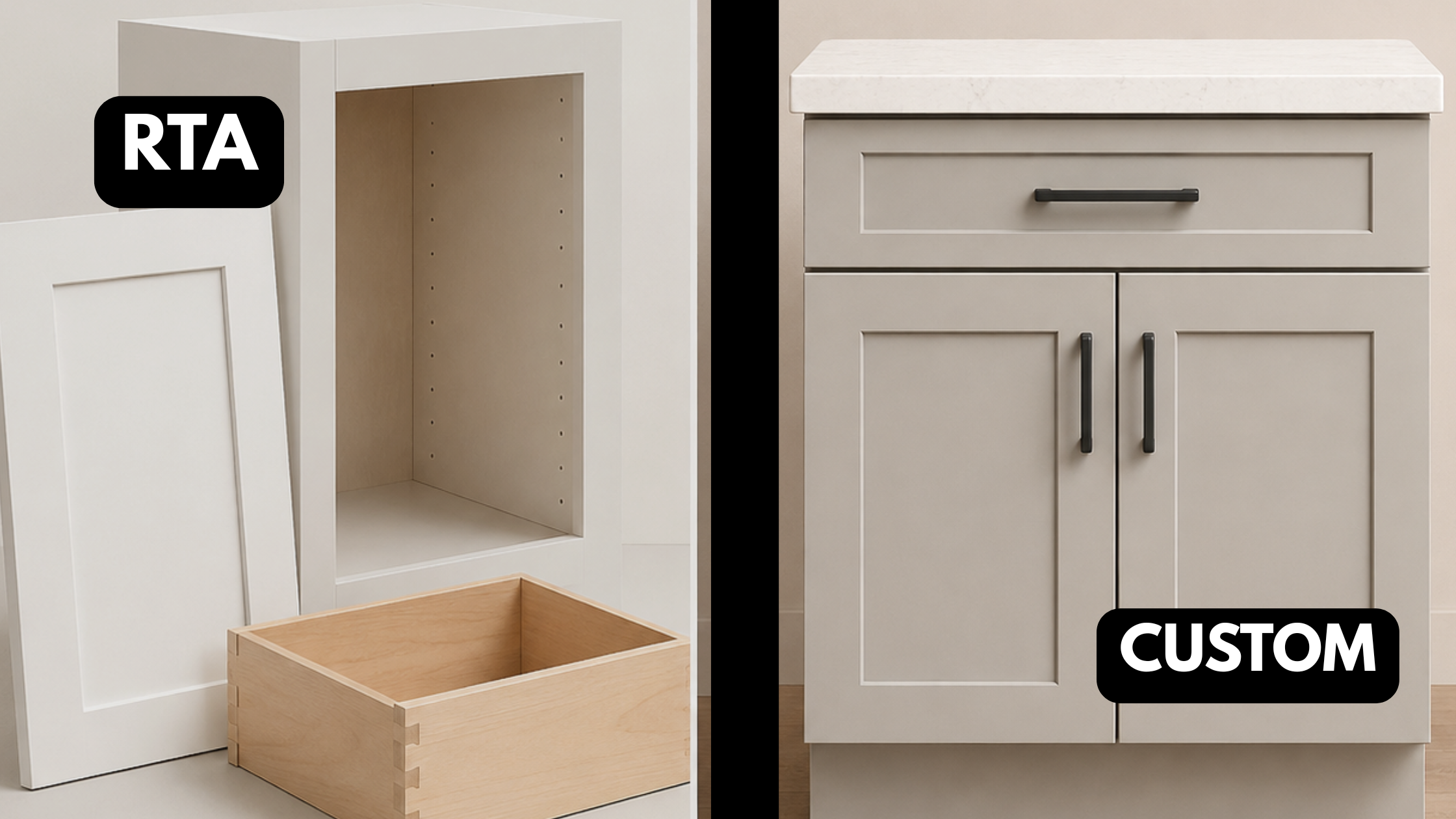
Windows are rarely standard, and that’s where custom or semi-custom cabinetry shines. Tailored cabinet heights, modified depths, and flexible layouts allow you to design around the window instead of fighting it.
If your layout is unique or your current cabinets feel limiting, this is often the point where homeowners choose to buy kitchen cabinets online that are built to fit their exact space. That way, there’s no forcing stock sizes into an imperfect layout.
Transform Your Kitchen With iCabinetry Direct
Designing kitchen cabinets around a window doesn’t have to feel like a compromise. With the right planning, it becomes an opportunity—to add light, personality, and thoughtful design.
At iCabinetry Direct, expertly designed cabinet options make it easier to create layouts that work with your windows, not against them. Explore styles, configurations, and finishes that help you confidently buy kitchen cabinets online and bring your ideal kitchen to life.
FAQs about Kitchen Cabinets Around a Window
What is the best way to position cabinets around a kitchen window?
Centering the sink under the window and balancing cabinets or shelving on either side is the most common and functional approach.
How much space should I leave between the window and upper cabinets?
Typically, 2–6 inches allows for trim and visual breathing room, depending on ceiling height and cabinet style.
Can I install a sink and cabinets directly below a window?
Yes. This is one of the most popular and practical layouts, especially for maximizing light during food prep.
What are the best cabinet colors for kitchens with large windows?
Light neutrals, soft whites, and natural wood tones work beautifully, as they reflect daylight and feel airy.
How do I maximize storage when designing around a window?
Use lower cabinets efficiently, add drawers instead of doors, and incorporate shelving or tall cabinets on adjacent walls.